Important point made by @auyouthenvoy_ on online and distance working and learning in response to #COVID19 – many in Africa are not online. Access to the interst is also a gender issue pic.twitter.com/oTt5jWG81q — Karama (@el_karama) April 20, 2020 A gender sensitive response to COVID19 crisis requires an intersectional response. This was the message […]
Category: News
Sanctions Threaten The Global Response to COVID-19
The coronavirus pandemic threatens the lives of millions across the world – and even more will be lost in countries like Sudan unless sanctions are lifted urgently. Like many countries in Africa, Sudan has scores of confirmed cases of coronavirus, with the government responding with strict curfews and restrictions. As is the case across the […]
Karama Update: COVID-19
As of Thursday 19 March, there are confirmed cases of COVID-19 in nine of the countries in which the Karama network partners work. We are in close contact with all of our partner organizations, and recommend everyone follows advice from official sources such as the WHO, which makes information available in Arabic, French and English. […]
CSW64 Cannot Go Ahead Without Global Civil Society
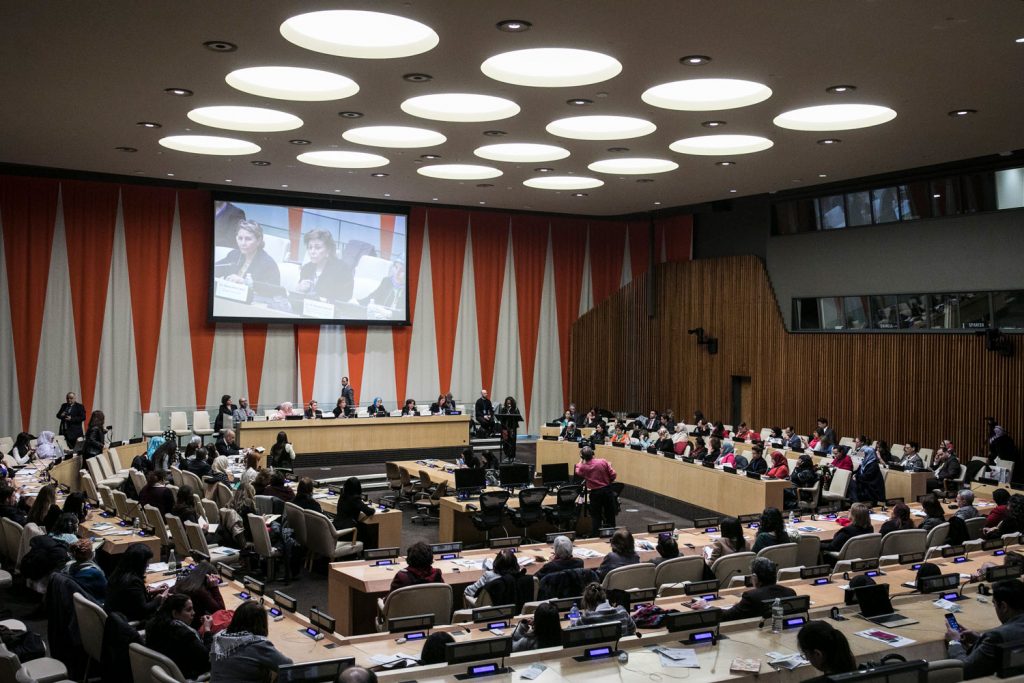
As women’s rights groups working in the Middle East and Africa, we recognize that the 64th Commission on the Status of Women cannot go ahead as planned given the COVID-19 situation, and urge that CSW64 be postponed until such time that all delegates are able to participate safely. We appreciate the difficult position the public health […]

Our deepest condolences to Maya Morsy and her family
The Karama women’s movement offers its deepest condolences to Maya Morsy and her family following the tragic passing of her son, Amin Tammar Musa. We are profoundly saddened, and our hearts go out to you, sister, and to your family at this difficult time. Karama
MANSAM: From the Streets of Khartoum to the UN Security Council
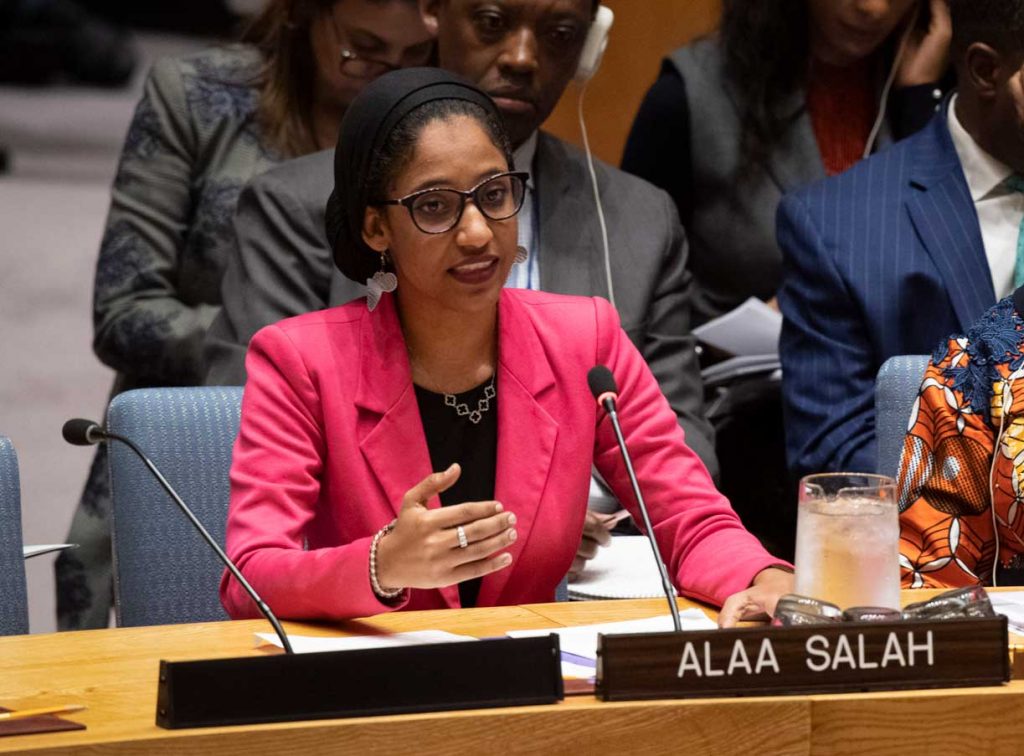
Alaa Salah urged the United Nations to press for the equal participation of women in Sudan’s transition. Ms Salah attended the Security Council meeting on women, peace and security as a representative of MANSAM, the coalition of Sudanese women’s civil and political groups. Ms Salah also called for the immediate transferral of deposed president […]
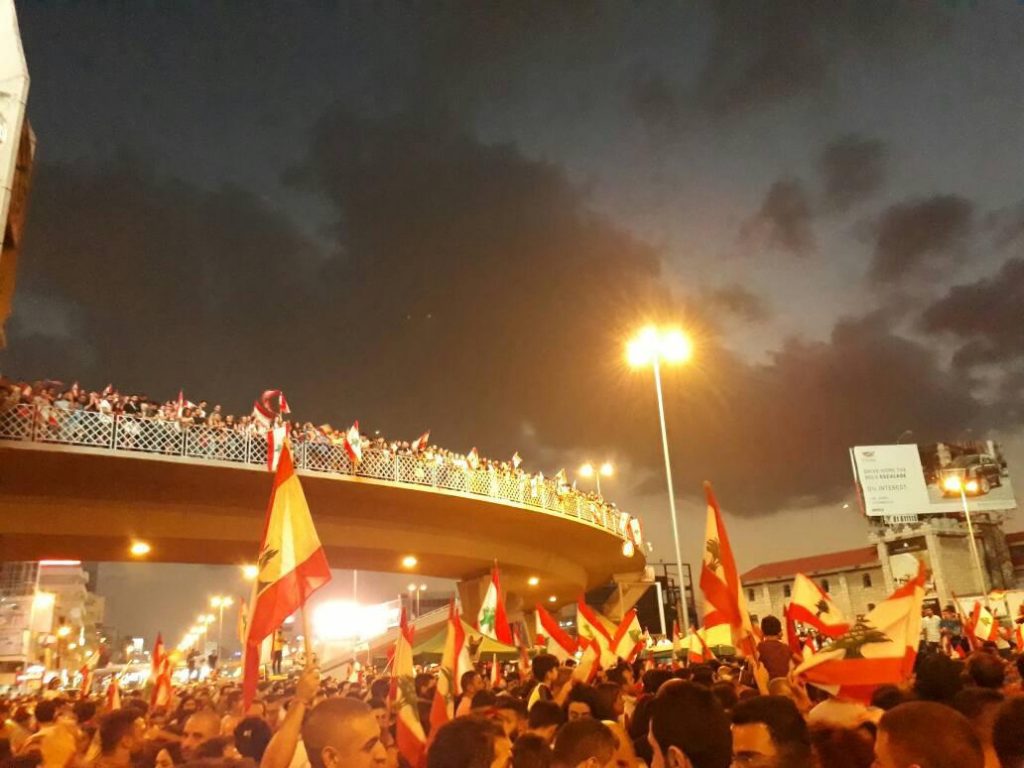
Women in Lebanon Protest as Equals
The huge protests that have brought Lebanon to a halt are marked by the sight of women protesting side-by-side with men. Lebanese women are showing extraordinary courage to demand an end to corruption and impunity, and for all Lebanese to enjoy equality – regardless of their religion, sect or politics. The women who have taken […]
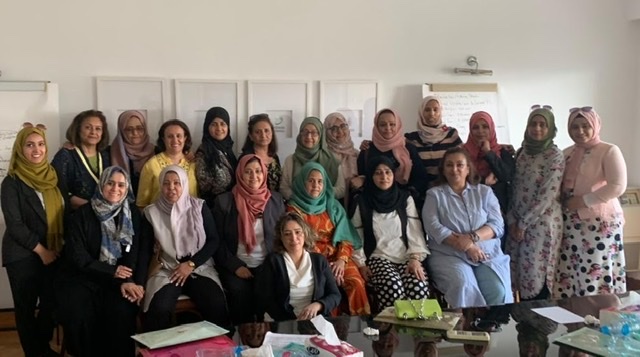
Yemeni Women Remain Determined For Peace
Yemeni women activists met in Cairo today to discuss how they could coordinate their activism to better work towards bringing peace to their homeland. The meeting was led by the Sisters Arab Forum for Human Rights, in cooperation with Karama and Operations 1325, . At the opening, the Chairperson of the Sisters […]
Equality for Sudan – Statement from MANSAM
Statement from MANSAM – Sudan’s Women, Political and Civil Groups Sudanese women did not wait to be invited to participate in the revolution; our participation is born from centuries of oppression and omission of women’s affairs and women’s rights from public life. Women have endured the declaration of the Public Order Law, and decades of […]
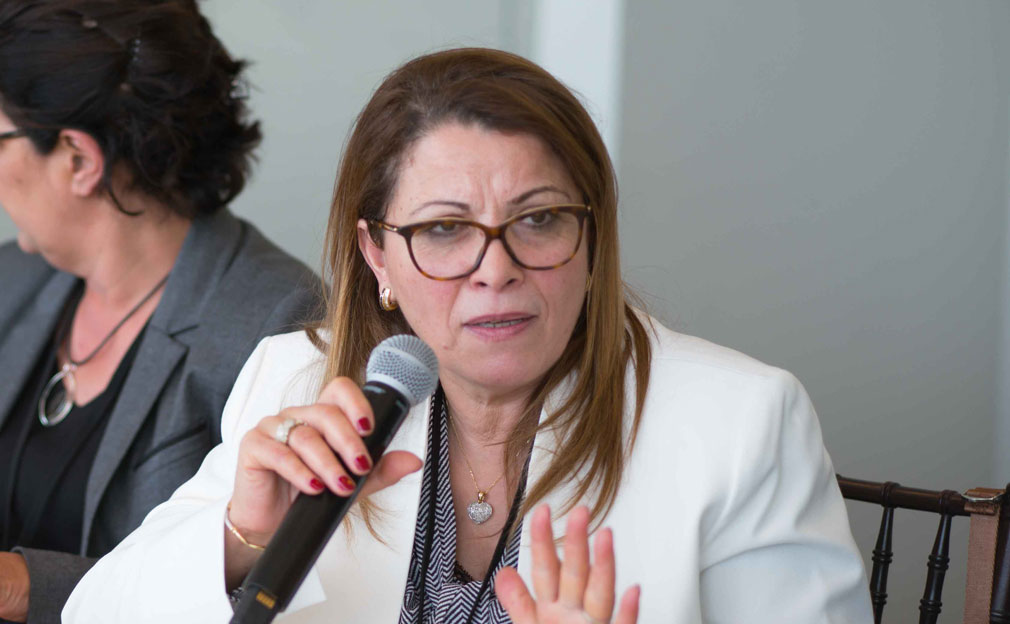
Saadia Wadah Appointed Human Rights Chair in Casablanca
The Karama women’s movement expresses its warm congratulations to Saadia Wadah on her appointment as chair of Regional Human Rights Commission of Casablanca-Settat. Saadia has previously served as member of the National Council of Human Rights and the coordinator of the working group for the protection of human rights and violations’ review. Her appointed as chair […]
Agreement Is a Step Forward for Sudan – It Must Be Inclusive
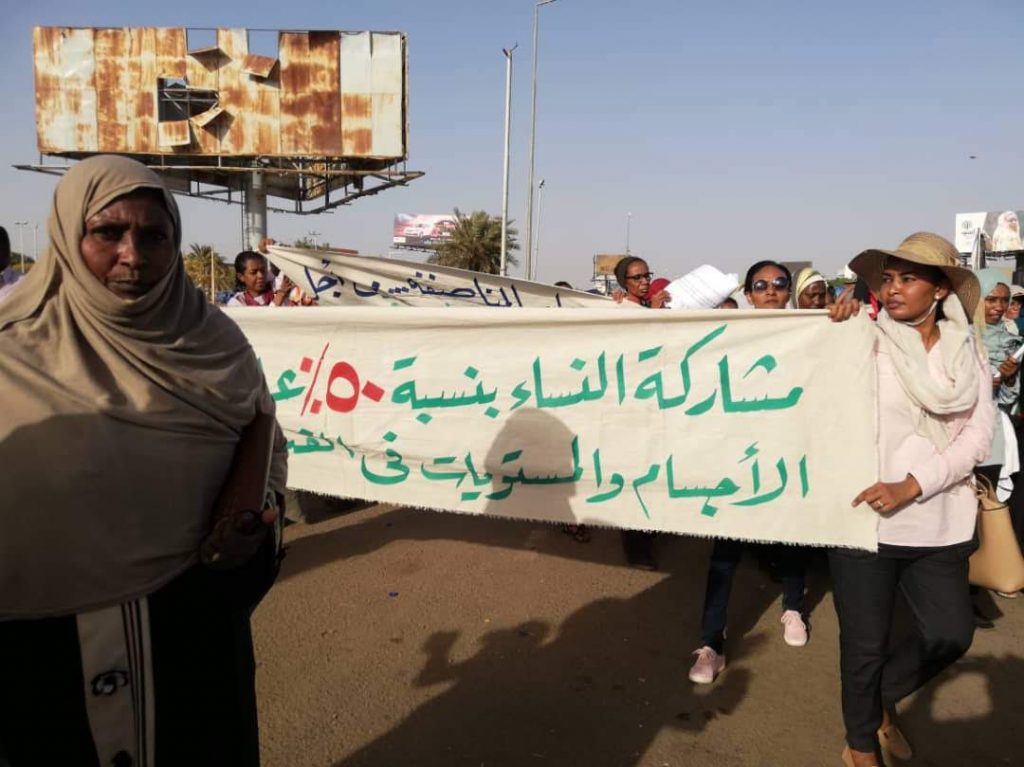
The Karama movement cautiously welcomes the agreement between the Sudanese Forces of Freedom & Change and the Transitional Military Council as a step toward full and inclusive civilian leadership in Sudan. From the very beginning of the uprising, the millions who have taken to the streets have made clear that the people of Sudan should […]
We #StandWithSudan
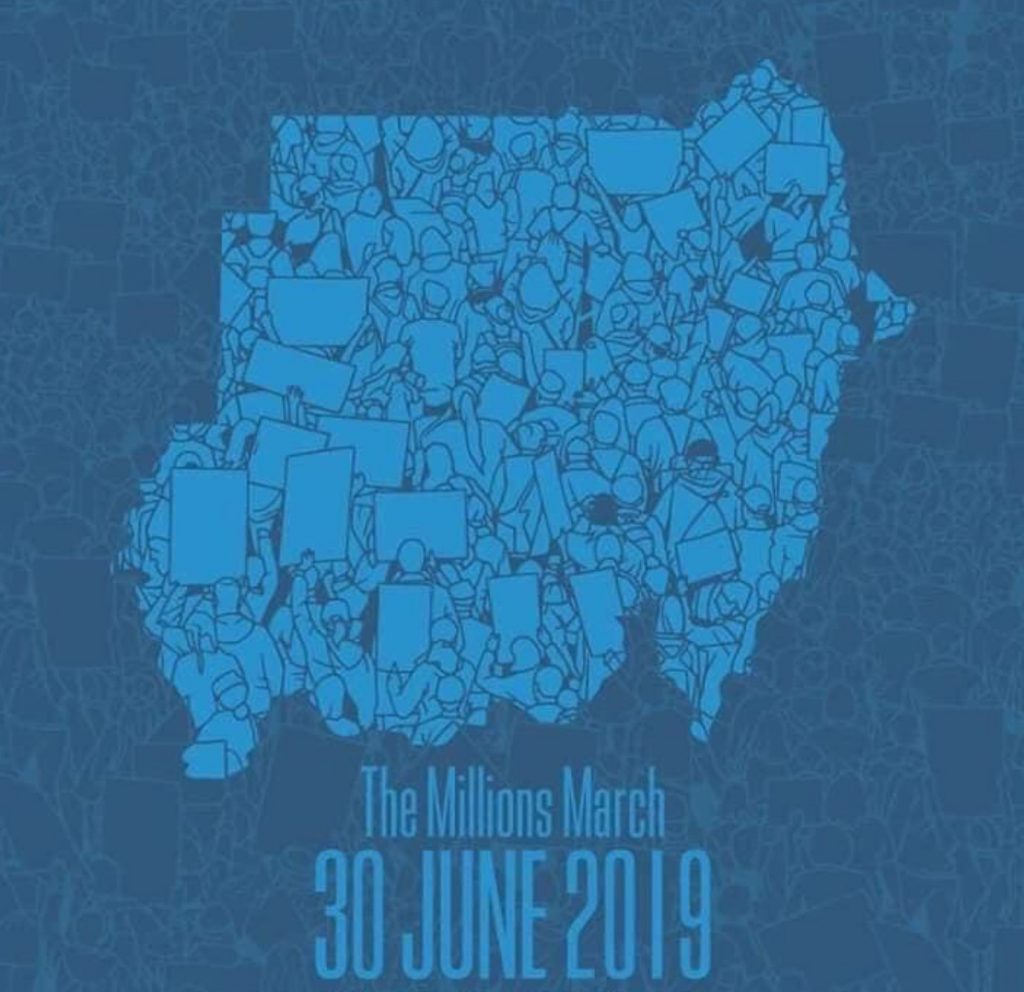
The Karama women’s movement stands with our Sudanese colleagues and the protestors of Sudan. As the people of Sudan again take to the streets right across the country, the eyes of the international community must be on Sudan to ensure that there is no repeat of state violence wielded against the peaceful protests. We #StandWithSudan, […]
Karama at Women Deliver 2019
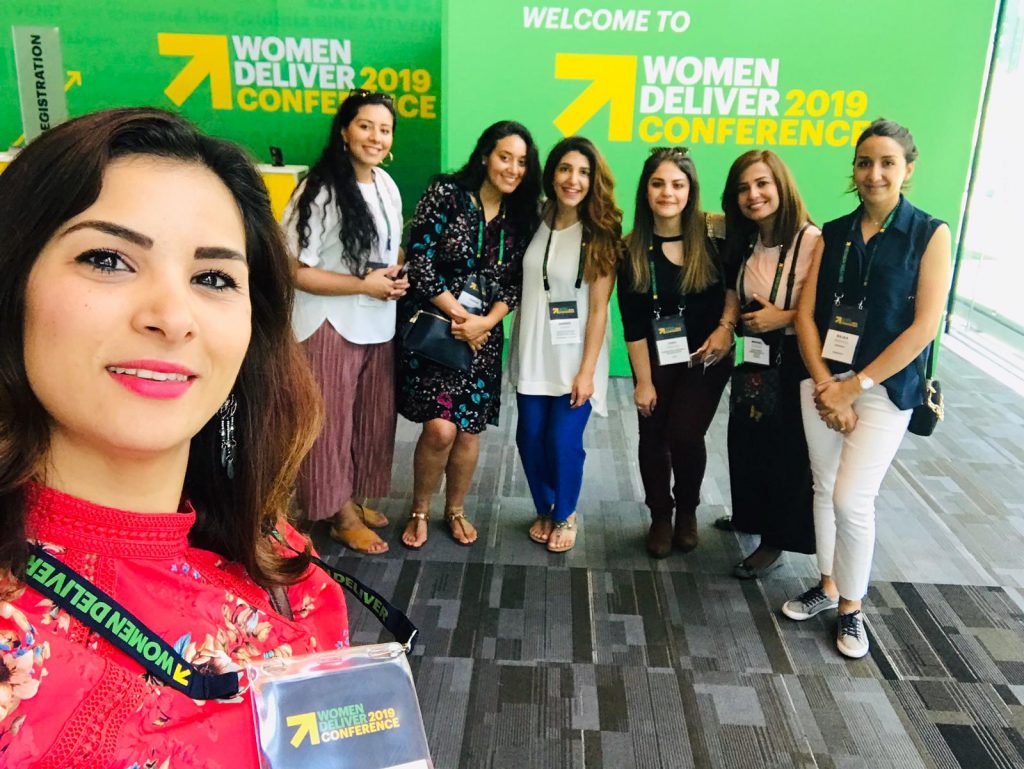
Members of the Karama women’s movement demonstrated that youth is ready to lead at the Women Deliver conference in Vancouver. Karama’s delegation was made up exclusively of young women leaders, with representatives from women’s group Iraq, Jordan, Libya, Morocco, Palestine, and Tunisia attending the world’s “largest conference on gender equality and the health, rights, and […]
There Must be an Immediate End to State Violence in Sudan
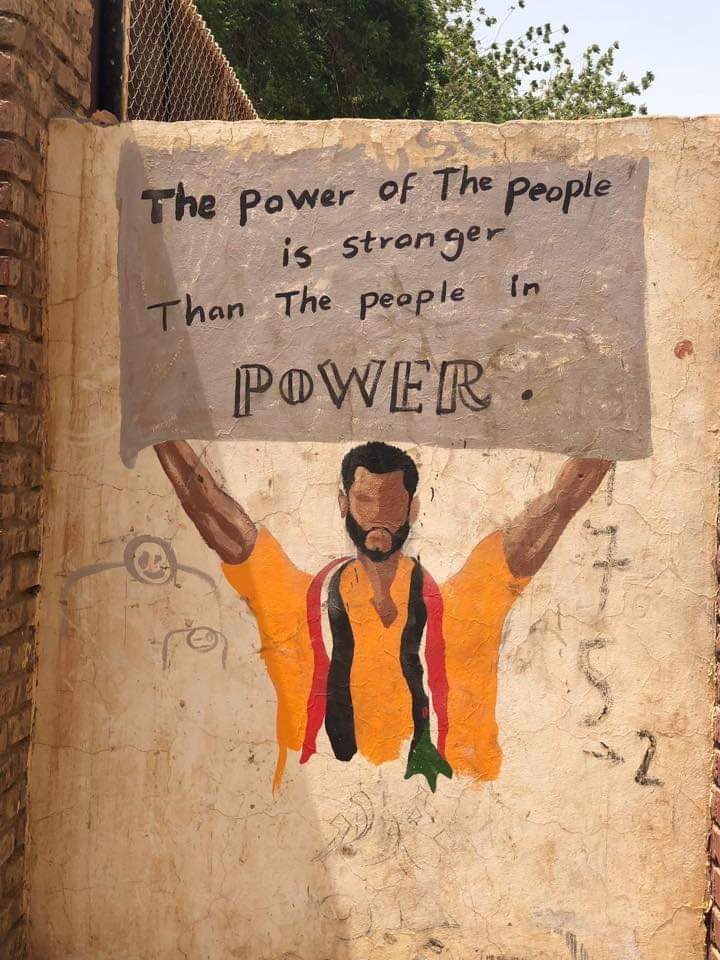
Sudan’s security forces must end their violence against protestors immediately, and the military administration must hasten the transition to civilian leadership of the country. The appalling scenes of violence committed by State forces against peaceful protestors are a direct call to action for the international community. The UN Security Council has a responsibility for the […]
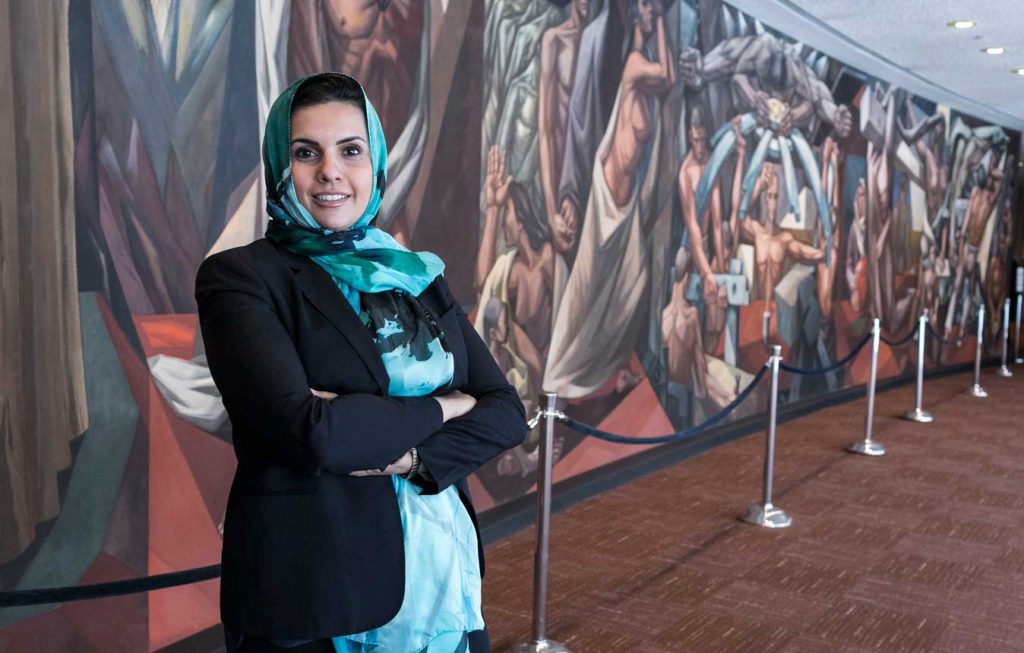
Zahra’ Langhi: Sudan’s women revolutionaries must beware fate that befell women in Libya
Women like Alaa Salah have overnight become icons of the Sudanese popular movement that brought down Omar al-Bashir. But they risk being marginalised by the proposed transition led by the military. It is little remembered now but women were also leading figures in the Libyan revolution of 2011. Women lawyers like Salwa Bugaighis were the first protestors outside […]
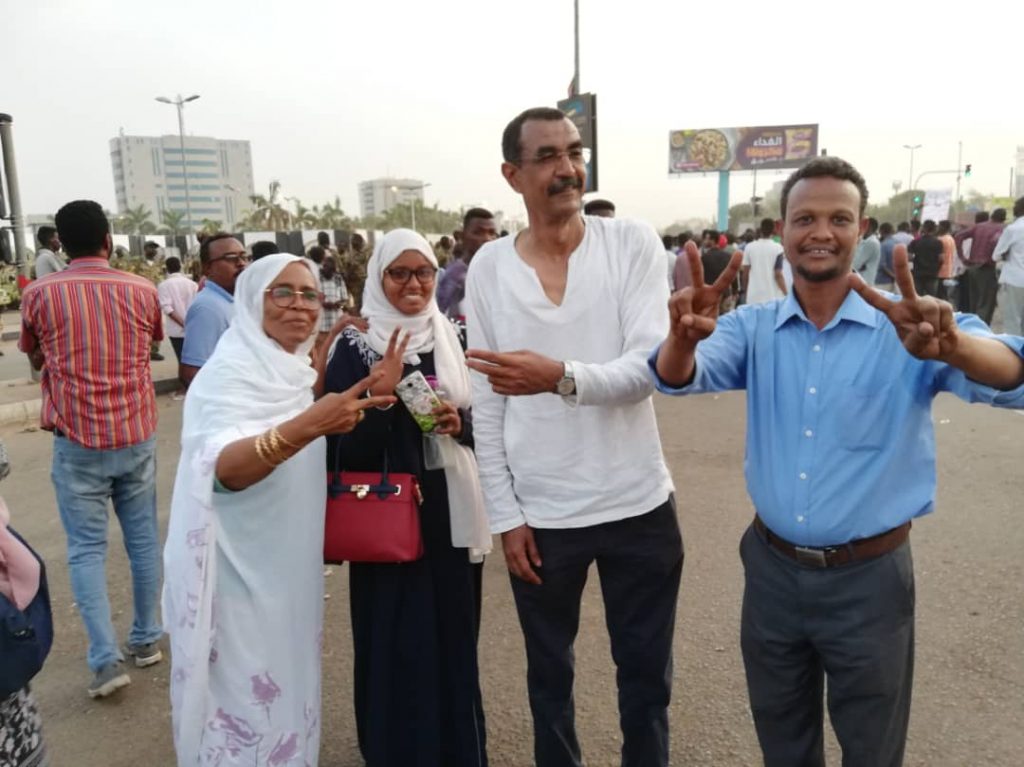
Sudanese Women Are Right to Demand Parity in the Transition
Sudan’s transition must be inclusive if it is to build a country for all Sudanese. The Karama network endorses the Sudanese Women’s Declaration For Change No (1) April 2019, and its calls for gender parity as a minimum for Sudan’s governmental institutions, executive bodies, legislative and the judiciary, including at decision-making level. The uprising […]
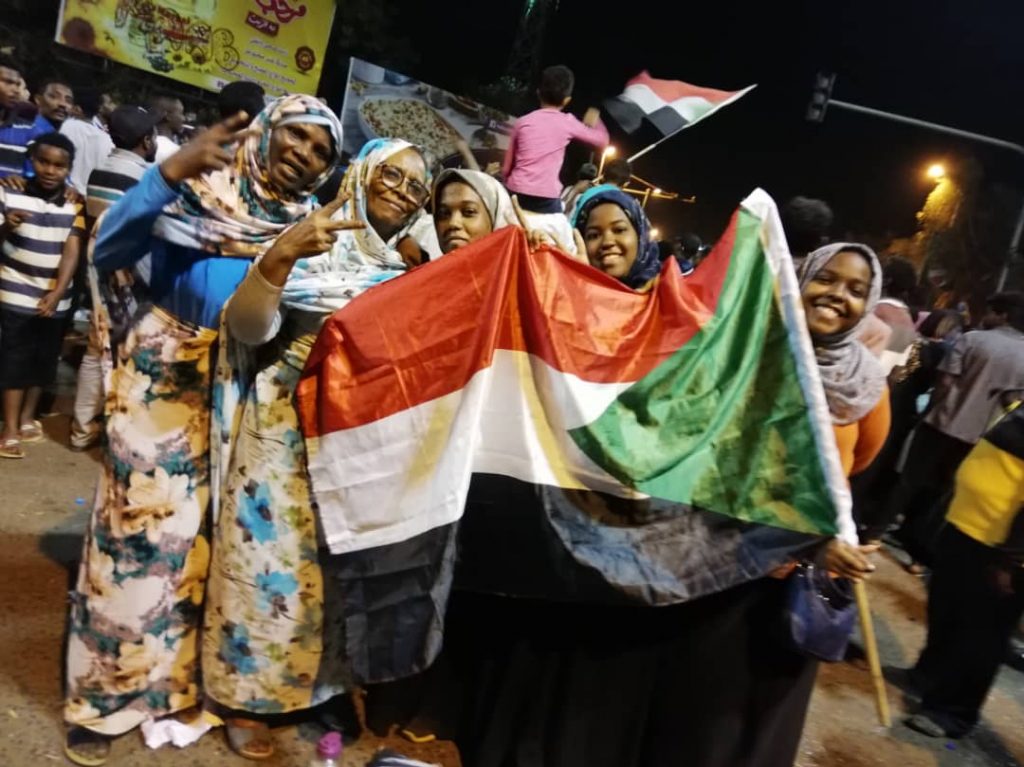
#SudanUprising Must Not Be Stolen From The Women Who Led It
Sudanese women have led the #SudanUprising popular movement against the regime of Omar al-Bashir, they cannot be excluded from the country’s transition. The world has watched as huge, peaceful protests have swept across Sudan, leading to the apparent resignation of the man who has led the country for nearly 30 years. This popular movement has been […]
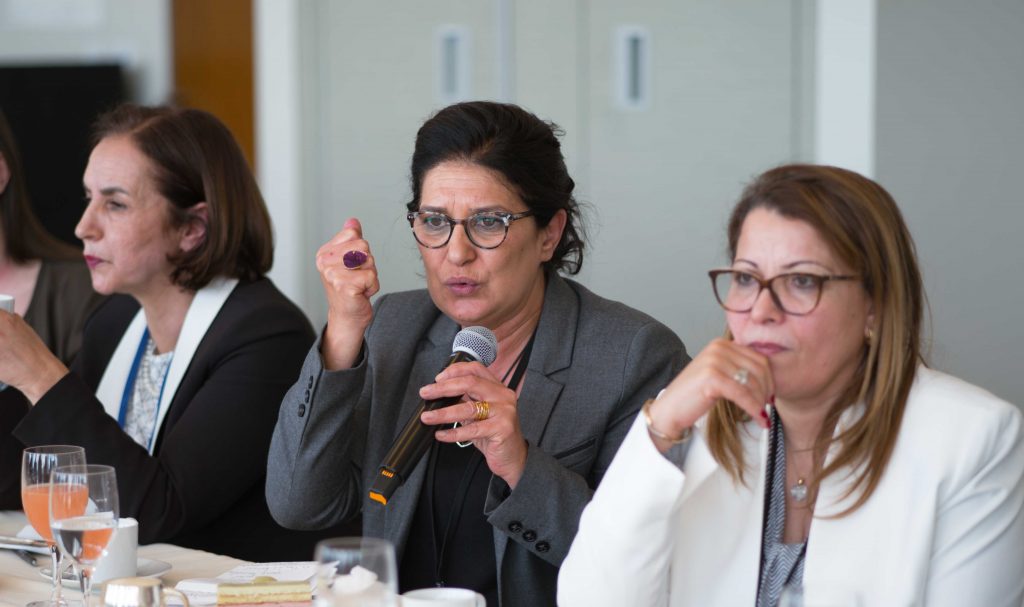
CSW63: In the United Nations, Moroccan Women’s Rights Activists draw a bleak picture of the status of Moroccan women
Women’s rights activists have painted a bleak picture of the status of Moroccan women during the 63rd session of the UN Commission on the Status of Women on “Economic Empowerment and Social Protection for Women and Girls”, held in New York. Delegates have noted that despite positive achievements for economic empowerment and social protection […]
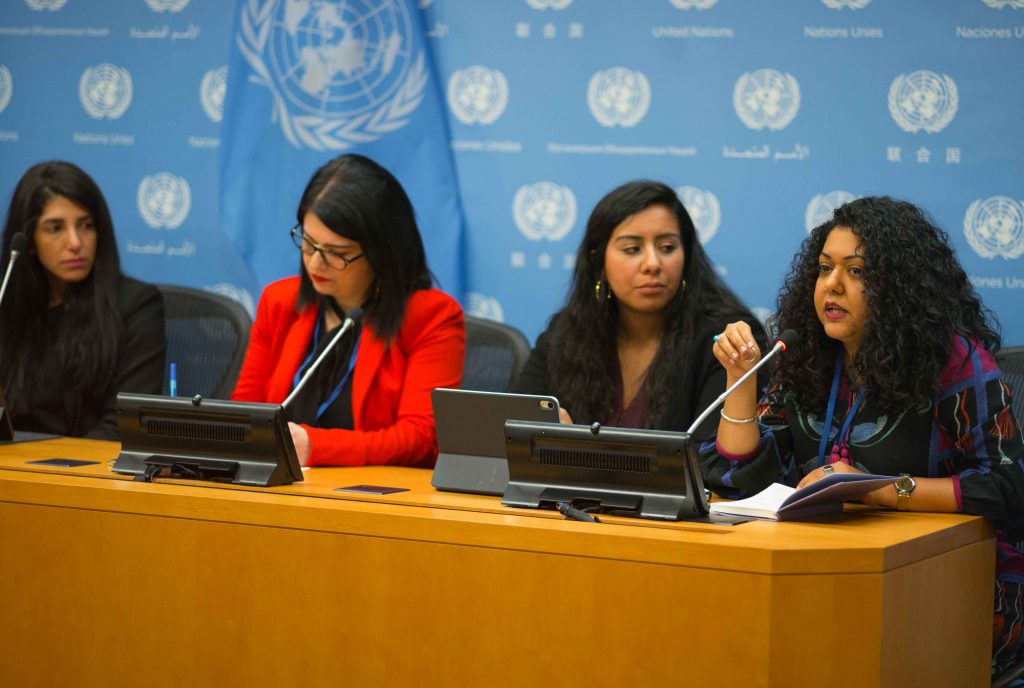
CSW63: Don’t Wait to Take Action on Women, Peace and Security
The international community is not living up to the commitments it has made and women in conflict are paying the price. This was the message from women’s rights activists from the Arab region at a press conference held at the United Nations during the 63rd Commission on the Status of Women in New York […]
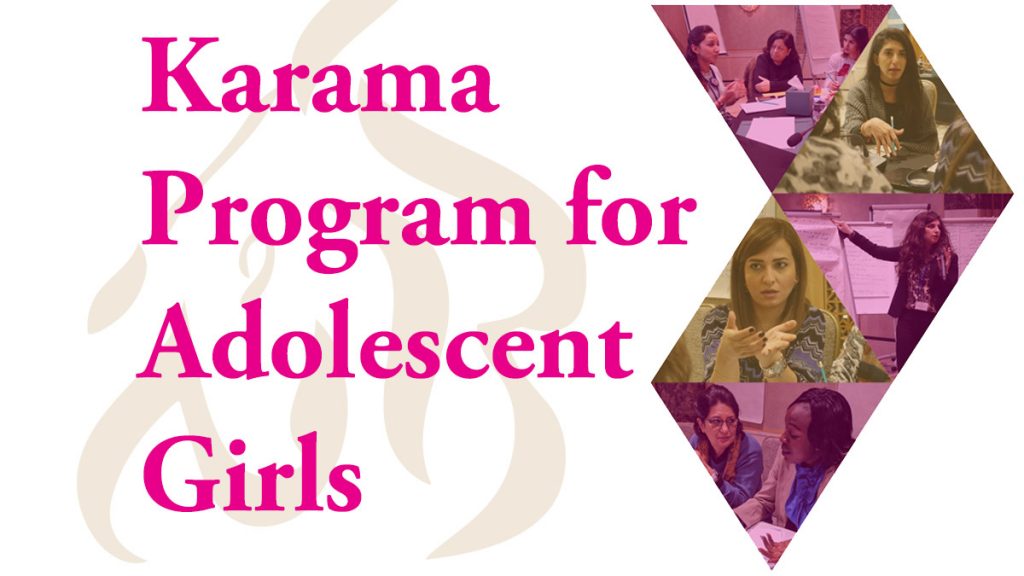
IWD 2019 – Launch of the Karama Program for Adolescent Girls
International Women’s Day 2019 sees the public launch of the Karama Program for Adolescent Girls. A significant advancement for the already well-established Karama women’s movement, the program represents the first time the network has focused work on a specific age group, expanding Karama’s work to strengthen, organize, amplify, and elevate women civil society leaders to a […]
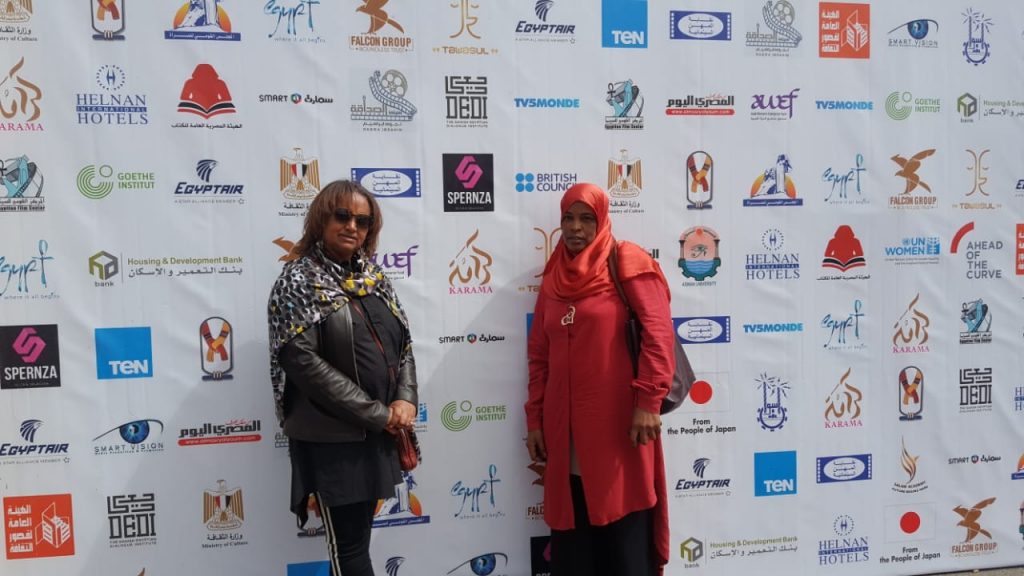
AIWFF – A Film Festival For The People
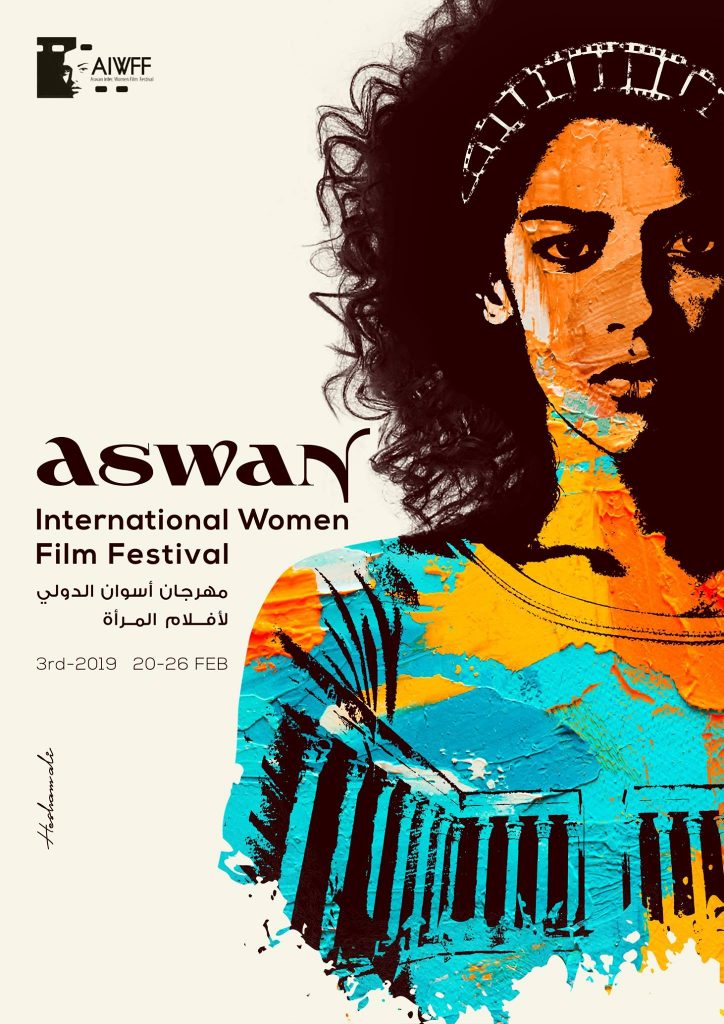
Karama has been delighted to support the Aswan International Women Film Festival (AIWFF) for the second year running. Few if any film festivals are able to combine red carpet glamor and popular film stars, along with an appeal to and contribution from the community, but AIWFF has managed to do just that. After just three […]
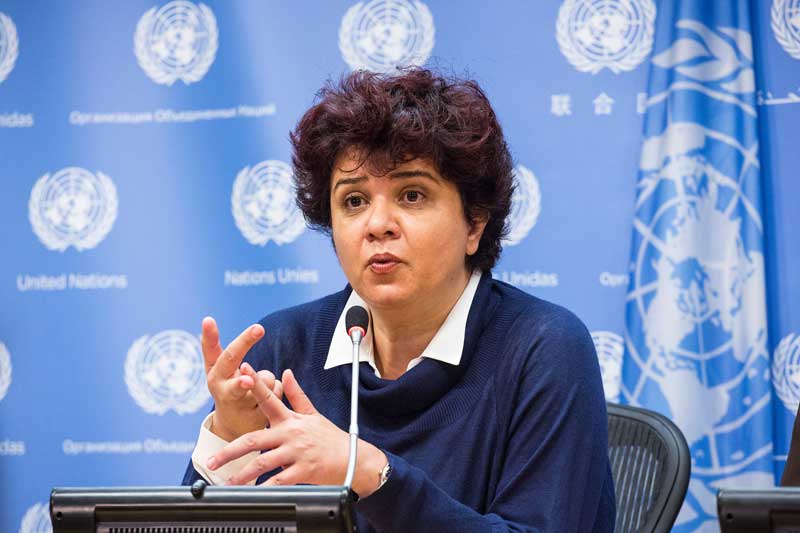
What Was The Reality of The Syrian Women’s Advisory Board?
The Women’s Advisory Board to the UN Special Envoy to Syria was heralded as an innoivative means to include the women’s agenda in the Syrian peace process? Activist, co-founder of the Syrian Women’s Forum for Peace, and former member of the Women’s Advisory Board Mouna Ghanem has written of her experience in Independent newspaper. Mouna writes […]
What are Personal Status Laws, and why do they need to be reformed?
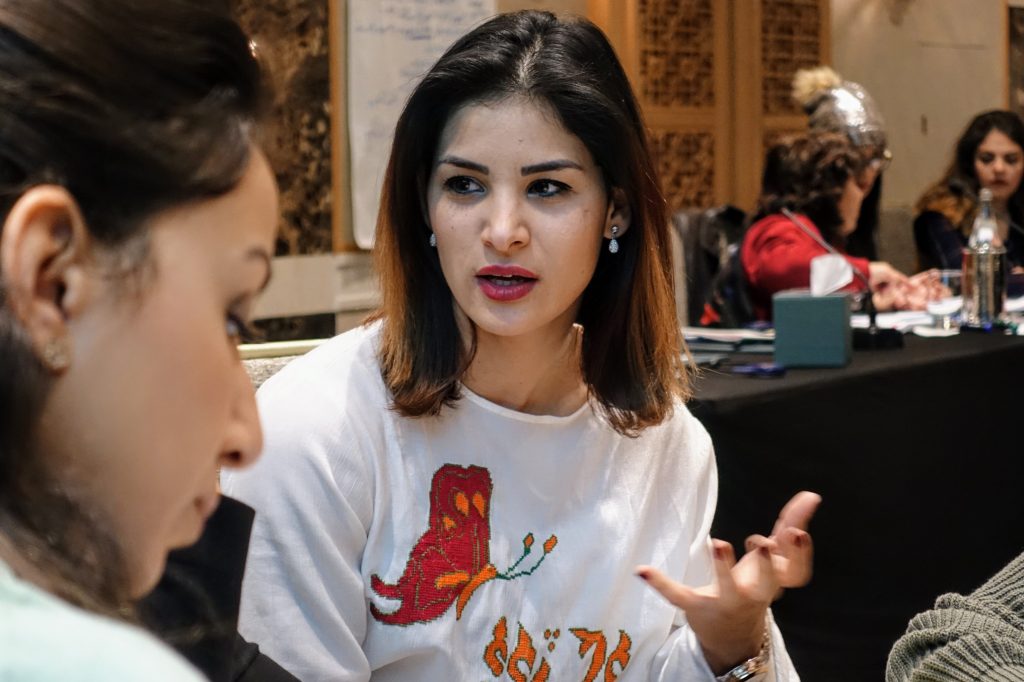
Activists across the Arab region are campaigning for reform of national Personal Status Laws, many of which institutionalize discrimination against women. But what are these laws, and why do they have such a negative impact on gender equality? We spoke to Amani Aruri of the Women’s Centre for Legal Aid and Counseling about their work to reform the […]
LWPP & Karama Screen a New Documentary on Psychosocial Rehabilitation Demands in Post-Conflict Libya
The Libyan Women Platform for Peace (LWPP) has screened its latest documentary during the Aswan International Women Film Festival. The film “A Tale of Resilience” is the third in a documentary series on demining and post-traumatic stress disorder in Libya produced by LWPP. All three documentaries highlight the individual, social, and economic long-term effects of […]
#CSW63 Must Look at the Effect of Militarization
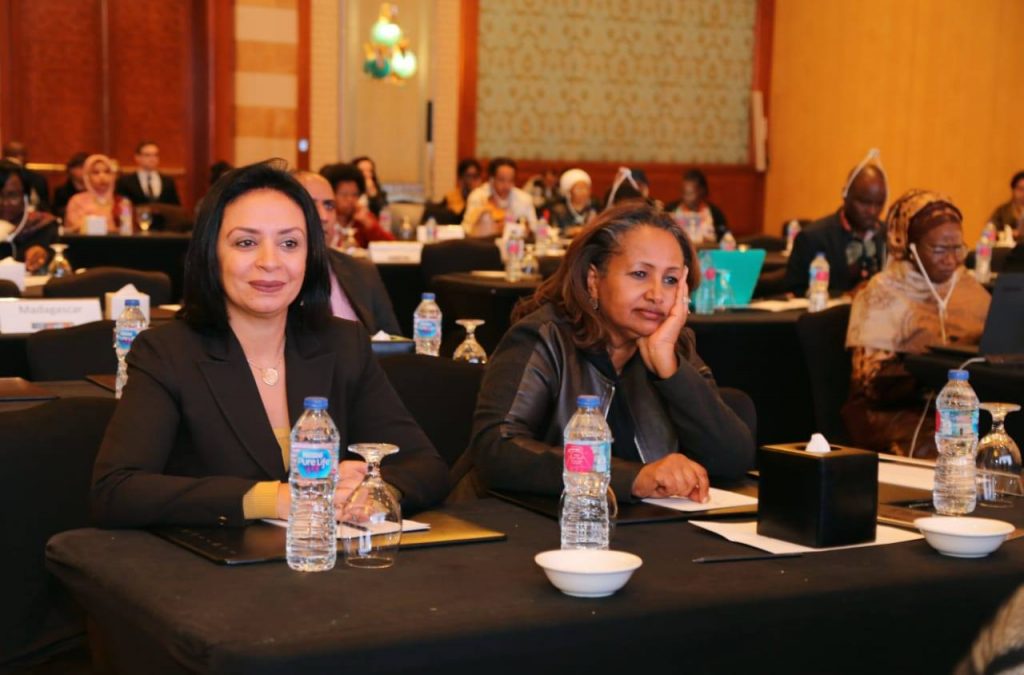
Hibaaq Osman’s remarks to the UN Women and African Union preparation event for CSW 63, Social Protection Systems, Access to Public Services and Sustainable Infrastructure for Gender Equality and the Empowerment of Women and Girls. It’s very welcome to be here representing civil society looking ahead to the priority theme of CSW because in many […]
Sudan Protests: The World Cannot Stand By in Silence
The escalating violence on the streets of Sudan is a conscious and lamentable decision made by the regime, which is now apparently trying to stem the protests and hide its human rights violations by blocking access to the internet in Sudan. The popular momentum behind the protests in Sudan has been clear to see. Journalists […]
Our Solidarity With The People of Sudan
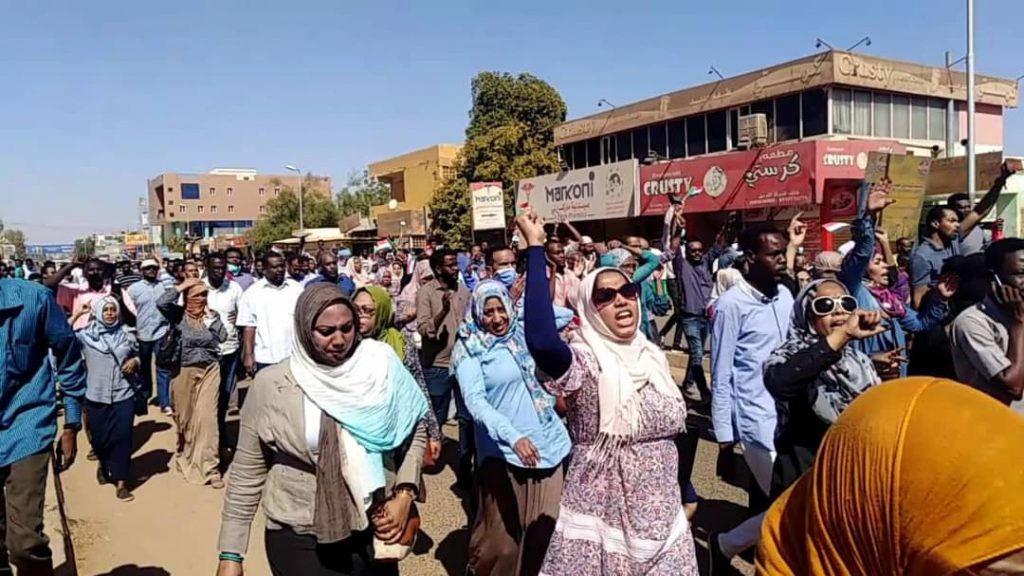
The Karama movement expresses its solidarity with the people of Sudan, and condemns the violence perpetrated against peaceful protestors exercising their rights enshrined in Sudan’s 2005 Interim Constitution. The scenes of bloody chaos on the streets – and even in hospital emergency rooms, as well as credible reports of detention, torture and injuries from live […]
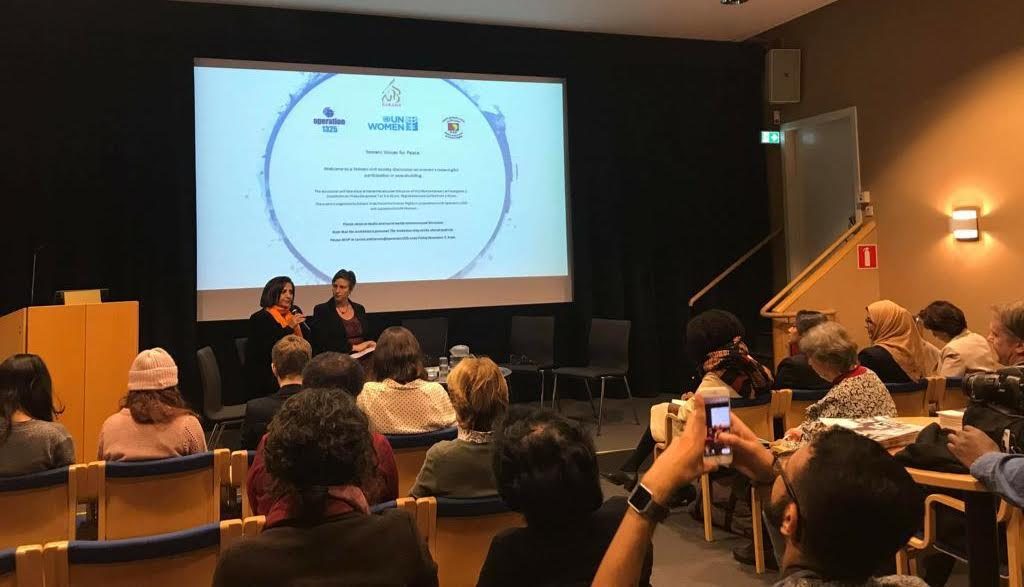
Yemen Needs Peace, The Stockholm Peace Talks Need Yemeni Women
The near total absence of women from the pre-talks on Yemen make one thing clear: we must no longer mistake the window dressing of technical advisory boards as actual women’s participation. The evidence has been clear for a long time – you cannot leave out the interests, influence and voices of half of society from […]
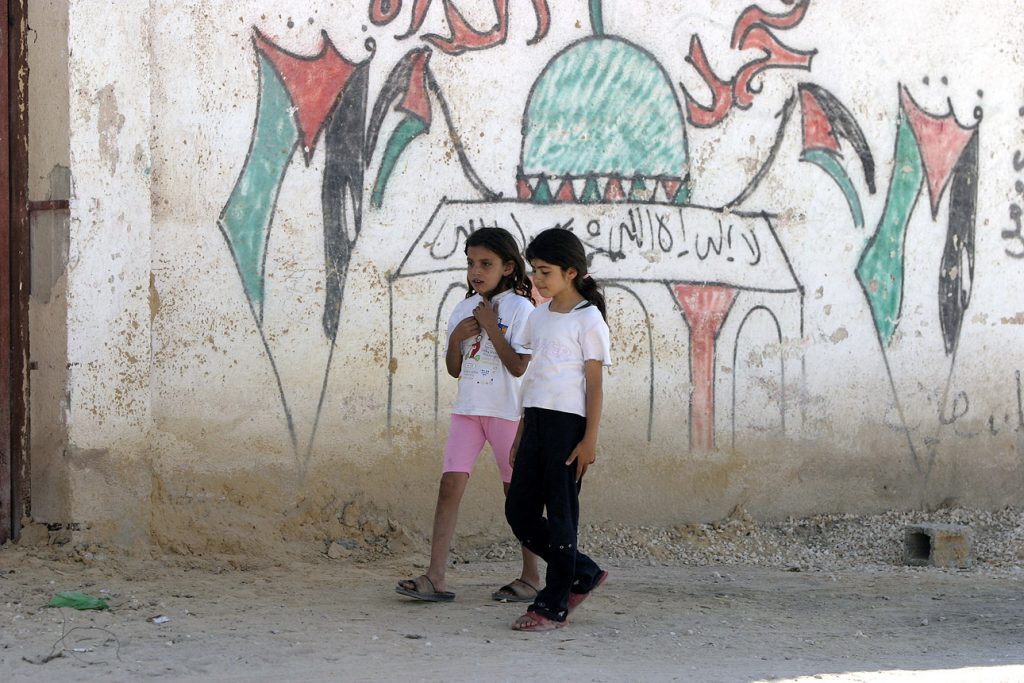
#PalestinianWomen: The Disproportionate Impact of The Israeli Occupation
The shocking human cost that occupation has taken on Palestinian women is laid bare in research published today. Combining research, extensive surveys, and first-hand testimonies from over 40 Palestinian women, Palestinian Women: The Disproportionate Impact of The Israeli Occupation provides new insight into the gendered experience of occupation, looking into four issues in particular: women refugees the […]
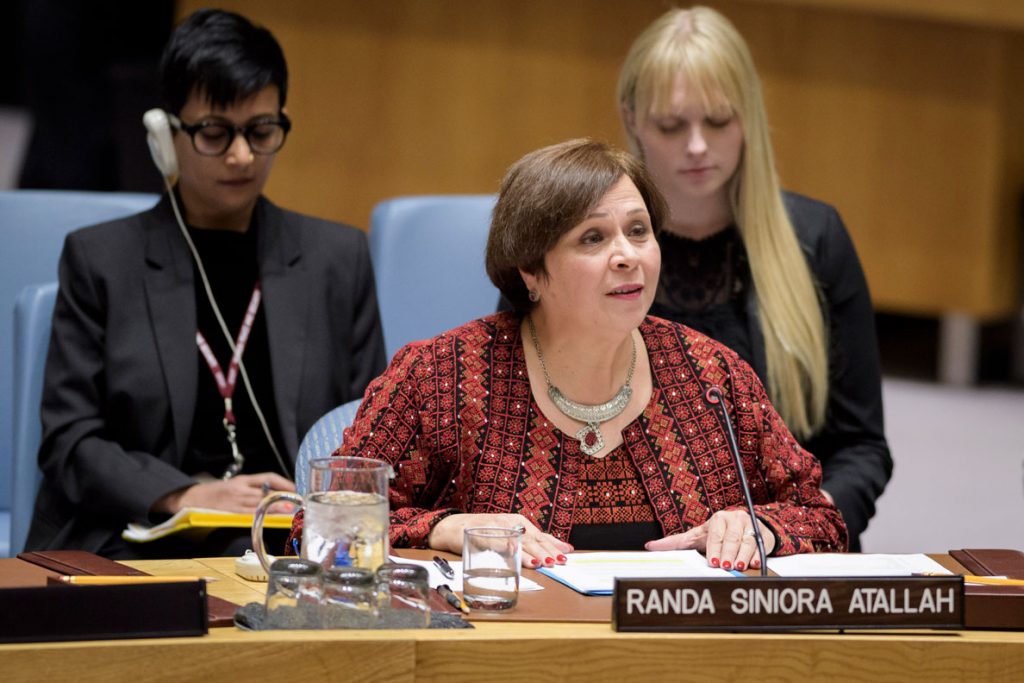
For the first time, a Palestinian woman addresses the UN Security Council
It is met over 8,000 times, but the UN Security Council had never heard from a Palestinian women – until today. Randa Siniora, head of the Women’s Center for Legal Aid and Counselling, told the Council today of the gendered impact that occupation has on the daily lives of Palestinian women. Speaking […]
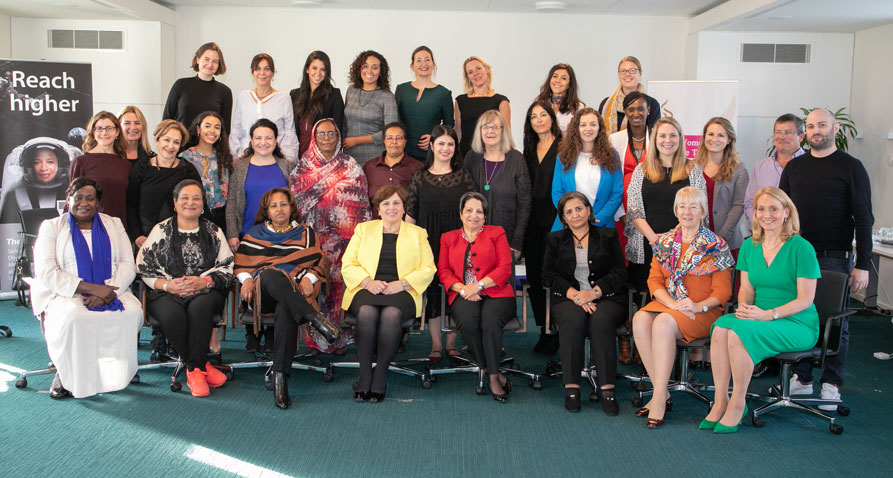
Grassroots activists speak in Cambridge
Women’s rights activists from across Africa and the Middle East were in Cambridge last week to discuss the effect that conflict and instability are having on women in their communities. They were joined by politicians, academics, government representatives and campaigners from across Europe to discuss the women, peace and security agenda – the framework through […]
Yemeni women must be part of Geneva talks
Yemeni civil society organization the Sisters Arab Forum for Human Rights (SAF) has underlined the need for women to play a meaningful role in the upcoming talks in Geneva. UN-brokered talks including the warring parties in Yemen will start on 6 September, but so far no women have been named in the delegations. Women fought hard […]
The health and welfare of Palestinian refugees must be above political game playing
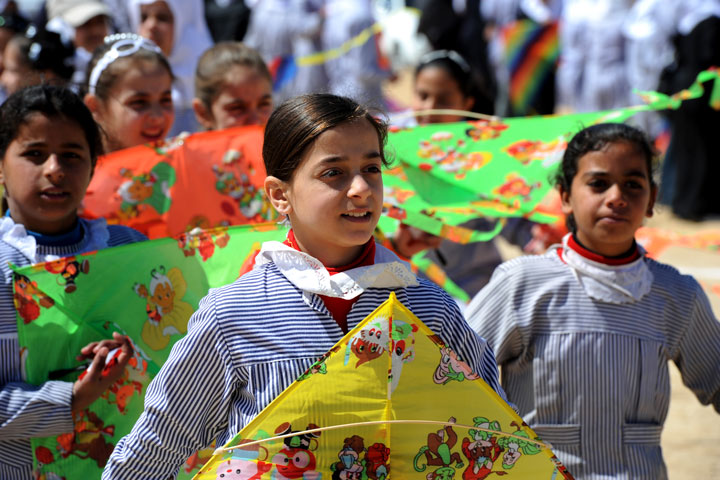
It is a catastrophe that the health, education and social support of Palestinian refugees are being treated as a political game. If the shortfall in UNRWA’s budget caused by the decision by the United States to cut their funding is not met, the result will be that schools will close, the sick will go untreated, […]

Activists Welcome Michelle Bachelet as New UN Human Rights Chief
Michelle Bachelet will take over as UN High Commissioner for Human Rights at an extremely challenging time, but she has what it takes to succeed, and she has our support. While head of UN Women, Michelle Bachelet set the standard for engagement with civil society, making sure that her door was open to women’s rights activists. […]

Iraqi Civil Society Addresses the UN Security Council
The UN Security Council heard evidence on the current situation for women in Iraq from civil society activist and head of the Cross-Sectorial Taskforce on UNSCR 1325, Suzan Aref. Suzan told the Security Council about how three crises in Iraq are impacting women. Currently, 8.2 million Iraqis require urgent assistance – most of these are […]
Yemen Peace Talks Offer “a Glimpse of Hope”
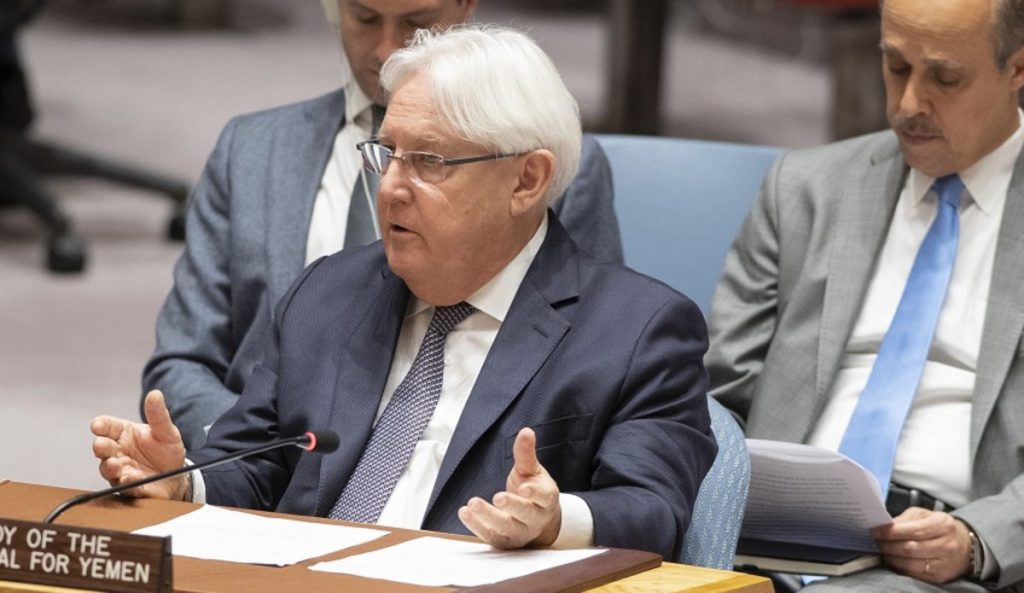
The announcement of consultations to end the way in Yemen have been welcomed by women’s rights activists. The UN’s special envoy for Yemen, Martin Griffiths, told the Security Council last week that he had invited the parties involved to Geneva on September 6th for “a first round of consultations…to discuss the framework for negotiations, to agree on […]
After seven years of impasse, new report shows a way forward for Libya
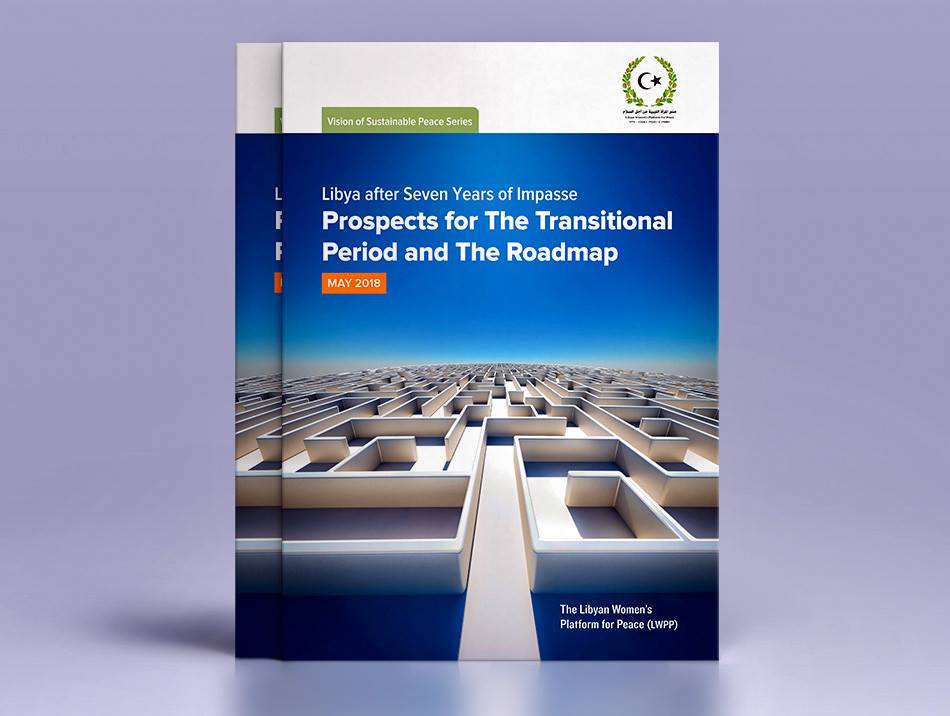
Read the full report – Prospects for the Transitional Period and the Roadmap Karama is delighted to support the launch of a report looking at the problems that have stalled progress in Libya’s democratic transition, and details how progress can be made. Since the 2011 revolution, Libya has struggled to make progress towards democracy, with […]
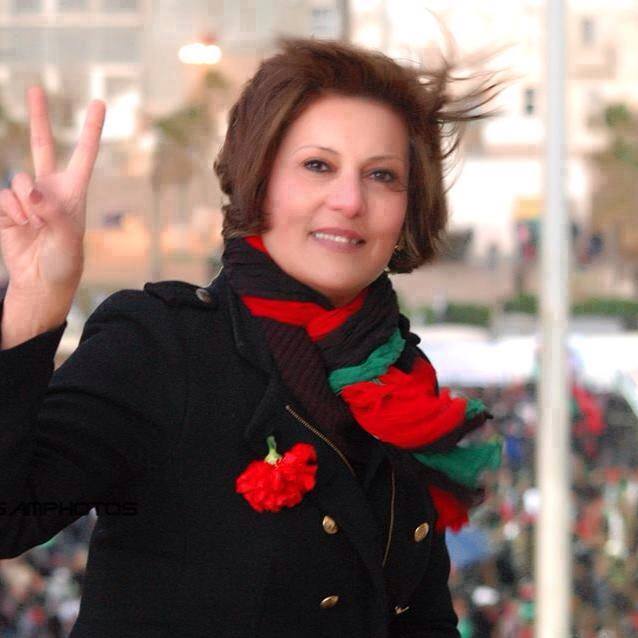
Four years on, still no #JusticeForSalwa
Today we mark four years since the murder of our friend and colleague Salwa Bugaighis. Four years since one of the brightest lights for democracy and equality was extinguished. Four years without #JusticeForSalw, without a proper investigation and prosecutions for this terrible crime. At the time, we said that if activists and human rights defenders […]

African Women Leaders at Yale
Our founder and CEO recently visited Yale University and Washington DC as part of a delegation of women leaders from Africa. The delegation was led by Spain’s Fundación Mujerese Por África. As well as academics, the delegation met with leading foreign policy experts and influencers, including former Secretary of State and presidential candidate Hillary Clinton. […]
We demand #JusticeForNoura
We add our voice to the #JusticeForNoura campaign. It is a great injustice that Noura Hussein has been convicted and faces the death penalty. Noura is strong young woman, who has been turned by injustice and inequality into a victim many times over. She is a victim of forced marriage, of child marriage. She is […]
On International Women’s Day 2018 There’s No Time to Look Back
On the one day the world sets aside for women, I do not feel like celebrating. How can I when it is women and girls who continue to suffer disproportionately in crisis and conflict? Bombs smash into the homes and families of Ghouta, leaving women to pick up the pieces. The livestock of Somali nomads […]
How Can Communities Be Resilient Against Extremism?
Extremism and intolerance in the Maghreb and Sahel region are putting the safety and security of the community at risk. What can rights activists do to challenge these threats? Civil society groups and religious institutions from across the region met in Tunis last week to discuss how they can make communities resilient against extremism. […]
#YemenCantWait – Film Reveals Shocking Impact of Conflict on Yemen’s Women
The Sisters Arab Forum has launched a short filming revealing the shocking impact of conflict on Yemen’s women. The film tells the stories of three women from Saada, Taiz and Hodeidah. Each must deal with the human cost of war: experiencing violence, displacement with their children and the loss of their parents, and the trauma […]
Freedom Of The Press Must Be Upheld In Tunisia
The freedom to express oneself and impart information and ideas through any media are fundamental human rights. Freedom of the press is – alongside a strong civil society – an essential means of holding power to account and giving voice to the community. It is unacceptable that journalists in Tunisia report being subjected to harassment, intimidation and […]
Sister’s Arab Forum Conducts Workshop on Women and Peacebuilding & Strategic Planning for Yemen
Yemeni civil society organisation the Sister’s Arab Forum for Human Rights completed their workshop on Women and Peace in Yemen and Strategic Planning in Alexandria today. The four-day workshop was organized by the Arab Sisters Forum for Human Rights in cooperation with the Swedish Institute in Cairo and Karama. The workshop aimed to continue the […]
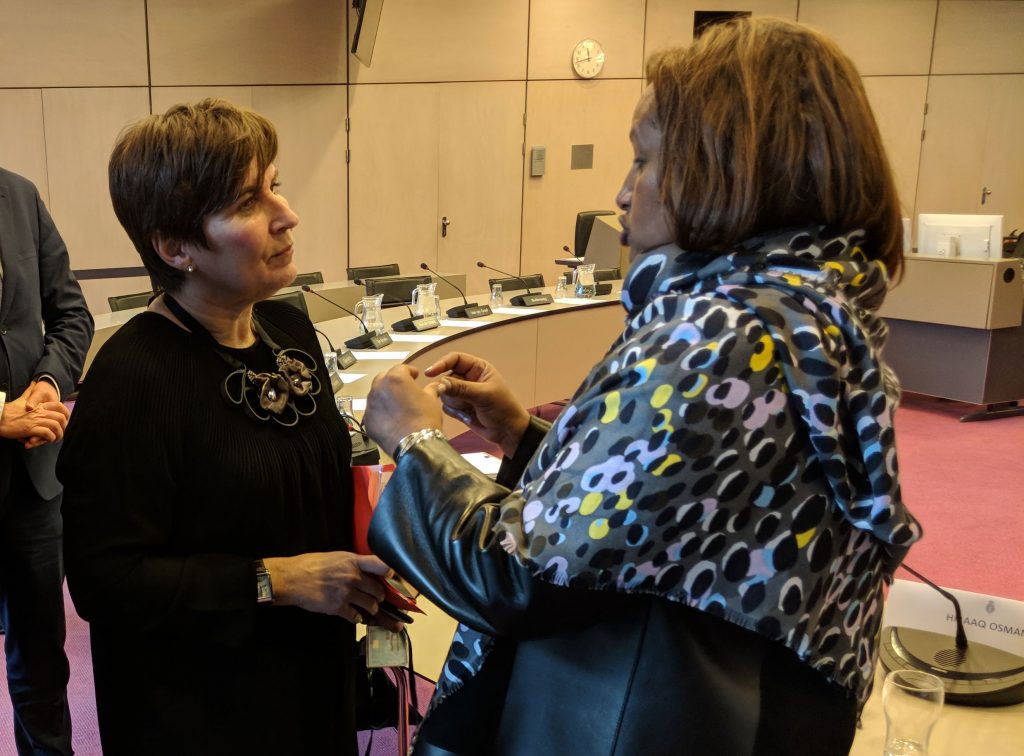
Human Rights Activists Tell Dutch Parliament: To Empower Women You Must Disempower Warlords
Despite representing an essential constituency for peace, women continue to be marginalised and excluded from peace processes in the Arab region, a meeting of Dutch MPs was told earlier this week. Members of the foreign affairs committee invited women’s rights activists from Iraq, Libya and Yemen to The Hague to discuss the impact of conflict […]
Activists Welcome UN Security Council’s Groundbreaking Demand For Justice For Salwa Bugaighis
Women human rights defenders have welcomed the Dutch government’s demand for an investigation into the murder of Libyan human rights activist Salwa Bugaighis. At a meeting of the UN Security Council on Wednesday, the Netherlands demanded that Salwa’s murder be investigated and prosecuted. This is a remarkable step as such calls are usually reserved for […]
Libya’s Slave Markets Show We Must Challenge Racism Wherever We Find It
Bigotry is at the heart of much of the equality we face across the world, read our CEO Hibaaq Osman on the need to address all forms of racism and prejudice. Libya’s Slave Markets Show We Must Challenge Racism Wherever We Find It
Statement on the US decision to move its embassy to Jerusalem
The decision of the US government to move its embassy and recognise Jerusalem as the capital of Israel is a shattering blow to the peace process and to the dignity of Palestinians. We support our Palestinian partners and condemn the US administration’s decision unreservedly. This announcement represents a serious and deeply harmful break from international […]
Karama co-hosts roundtable discussion: how can Yemen draft a constitution from a gender perspective?
Leading experts met in Cairo today to discuss how women’s rights and protections for women can be secured in constitutional drafting processes. The discussion brought together 24 participants to pay particular attention to Yemen, and understand what can be learned from the recent experience in the Arab region. The event was co-hosted by Karama and […]
To End Violence Against Women, We Must Fight All Forms Of Oppression
On the International Day for the Elimination of Violence against Women, we start the 16 Days of Activism Against Gender-Based Violence, read our CEO Hibaaq Osman’s article to mark the occasion: To End Violence Against Women, We Must Fight All Forms Of Oppression

The Netherlands must take its golden opportunity to help women be part of global peace processes, say women from the Arab region
The Netherlands must use it “golden opportunity” to make a difference for women in conflict when it takes up a seat on the UN Security Council next year. Women activists from the Arab region have urged the new Dutch government to take full advantage of its privileged position on the Security Council by making sure […]
Laws that allow rapists to marry their victims come from colonialism, not Islam
Read our CEO Hibaaq Osman in the Independent today on the movements to abolish laws that allow rapists to escape punishment by marrying their victim: Laws that allow rapists to marry their victims come from colonialism, not Islam
Missing In Action — Where Was The U.S. Women’s Movement On Justice For Nabra Hassanen?
Some time ago I attended a meeting of women’s rights activists from across the Arab region. We were in Cairo to discuss the great threats that women faced at the time ― the murder of human rights activists in Libya, the escalating war in Syria, the growing threat of a full-scale civil war in Yemen, […]
We remember Salwa Bugaighis and demand protection for human rights defenders
This weekend we pay tribute to the life of Libyan human rights defender Salwa Bugaighis. A lawyer, politician and activist, Salwa was a key figure in Libya’s recent history, first in the Benghazi protests that led to the revolution and then in the early stages of democratization. In an act that became symbolic of Libya’s […]
ونحن نسعى إلى تحقيق العدالة سلوى #JUSTICEFORSALWA
نحيي نهاية هذا الأسبوع ذكرى المناضلة الليبية والمدافعة عن حقوق الإنسان سلوى أبوقعيقيص. كانت سلوى، المحامية والسياسية والناشطة، شخصية رئيسية في تاريخ ليبيا الحديث، بداية من احتجاجات بنغازي في أولى أيام الثورة إلى المراحل الأولية من التحول الديمقراطي. في حادثة صارت رمزا لتعثر العملية الانتقالية في ليبيا والسقوط في الفوضى، اغتيلت سلوى في 25 يونيو […]
The Young Country At Risk Of Forgetting Its History
A country’s national day affords its people a chance to look back at their past, and consider where they might be headed to in the future. Many Somalilanders celebrating independence day today will remember the first, it took place just 26 years ago on 18 May 1991. The struggle they remember today was bloody. In […]
War Has Been Costly For The Arab Region And Africa, But Peace Is Priceless
A country which long ago became a hell for civilians can sink further still. Even after six years of the most brutal conflict imaginable, the pictures of children struggling to breathe after the chemical attack in Idlib still have the power to shock. Perhaps the most remarkable thing is that a country which long ago became a […]
The other travel ban that people aren’t talking about
Read Zahra’ Langhi of the Libyan Women’s Platform for Peace on the “women travel ban” in the Independent: This is the other travel ban against Libyans that people aren’t talking about
Libya: from 17th february 2011 until 2017 – No regrets for toppling Ghadafi regime and diverse ideas for the future
Gadhafi was toppled 6 years ago. When recalling that period I feel the smell of multiple cigarettes being inhaled at lightning speed and (prepaid) Nokia phones ringing constantly. Women and girls were constantly searching for Gaddafi-tanks who were being moved and hidden, printing leaflets and organising demonstrations. By the same token most women became DIY […]
A Letter To My American Children, From Your Somali Mother
The news that President Trump has started to enact his promised Muslim ban has struck at the very heart of our family. To hear that newborns are having background checks at immigration, that the president’s spokesman claims that 5-year olds pose a grave threat to America itself, I fear that I will never be able to return, to […]
The world must protect human rights defenders like Ali Al-Dailami
Karama and its partners have called for greater protection for human rights defenders after the brutal assault and detention of Yemeni activist Ali Al-Dailami. A widely-recognised advocate for human rights, Al-Dailami was subjected to a vicious ordeal as he passed through a checkpoint by Yemen’s Ministry of Interior in Sana’a on 25 January. This is not the […]
The Nobel Peace Prize Cannot be a Lifetime Pass
On the day that the great and the good prepare to congratulate Colombian president Juan Manuel Santos on his award of the Nobel Peace Prize, it would seem rude to act the party pooper. The recognition for Colombia’s remarkable journey towards peace is well deserved. The concerns being raised on the issue credibility are not […]
Women, peace and security will be essential for development in the Arab region – UN told
Women leaders from across the Arab region used the launch of the Arab Human Development Report in Beirut to highlight the importance of the women, peace and security agenda. A panel of experts told the launch that the region will not be able to build peace and achieve global development goals if it continues to […]
The Political Space For Women In The Arab Region Is Shrinking
Across the region women are seeing the gains they thought they had secured wiped out. As any scientist will tell you, for every action there is an equal and opposite reaction, and the same is true of political movements. Five years ago, the Arab world witnessed an unprecedented explosion of protest and political action. A […]
“If you’re not at the table, you are on the menu”
Dutch politician Harry van Bommel has been striving for peace and security in the Arab region for many years. A member of the influential Foreign Affairs Committee, Van Bommel taught as a lecturer before entering the Dutch House of Representatives in 1998. At the start of the 16 Days of Activism to end violence against women, we […]
Is The New Man At The United Nations A Feminist?
The debates on who would will lead the United Nations ended yesterday like they always do – behind closed doors with a man winning. The former prime minister of Portugal, António Guterres, emerged on Wednesday as the choice of the Security Council to serve as the ninth UN Secretary-General. Despite months of campaigning and much […]
After Years Of Being Sidelined, Syrian Women Aim To Make History At Peace Talks
This article was original published on Huffington Post on March 17, 2016. For five years, women have protested, fought, delivered aid, brokered peace and documented atrocities on the ground in Syria. Yet, when Syrians tried to end the war, women were sidelined. They have been largely absent from the negotiating table in rounds of failed […]
Advisor to Syria peace talks: Women should be at table
This article was originally published on Yahoo! News. UNITED NATIONS (AP)(March 15, 2016) — An activist who is on the board of women advising the United Nations special envoy for Syria on peace talks said Tuesday that women should be at the table actively taking part in negotiations. Mouna Ghanem, one of 12 members of […]
Not Enough Women At the Peace Table, Say Arab Activists
This article was originally published on IPS News online. UNITED NATIONS, Mar 17 2016 (IPS) – “When it comes to peace talks, women have a special stake,” said Gloria Steinem while discussing current peace talks in the Middle East. Steinem, a prominent activist, joined the 60th annual session of the UN Commission on the Status […]
When Will There Be a UN Secretary-General Like Me?
For the Muslims, Christians, Jews and followers of other Abrahamic faiths that make up over half the world’s population, the founding gender myth is that of Adam and Eve. In the beginning, man is created in perfection, but in order to enjoy the companionship of woman he had to give something up. Some scriptures are […]
Everything must go: Somalia sells its dignity
The dramatic fall in the price of oil has had some unusual effects on the petro-economies of the Persian Gulf. Countries like Saudi Arabia have grown dependent on importing cheap foreign workers to do the jobs its citizens won’t. Now, traditional sources of domestic labor like South Asia have become uneconomical in straightened times. Saudis […]
Women are the Bridges Across Syrian Communities, They Will be the Peacemakers
As talks to bring an end to nearly five years of conflict in Syria continue, it is essential that we learn the lessons of Iraq, Libya and the Arab revolutions if there is to be lasting peace. To rebuild stable state institutions after conflict, you need to make sure that everyone is able to take […]
This is the brutal effect of war on the women of Syria
This op-ed was originally published by The Independent on January 29, 2016. As the war in Syria approaches its fifth year, the toll it has taken on the country’s women has been particularly brutal. Four million Syrians have sought refuge abroad, while a further 7.6 million have been displaced internally. Though the refugees reaching European […]
This is the brutal effect of war on the women of Syria
Our CEO writes today in the Independent on the impact of war on the women of Syria. This is the brutal effect of war on the women of Syria
#JusticeForSalwa is Justice For All
This article was originally published at Huffington Post online. On Human Rights Day last year, activists across the world united in demanding justice for Salwa Bugaighis, the Libyan human rights defender murdered as she returned from voting in that country’s general elections. A year on there has still been no serious investigation into this appalling […]
We Won’t End Violence Against Women in 16 Days But It’s a Start
For the next 16 days, activists across the world will be joining UN Women in global efforts to end violence against women and girls, starting on November 25, International Day for the Elimination of Violence against Women, leading up to Human Rights Day on December 10. For those of us working on this cause in […]
Don’t Hold Back Your Tears for Yemen
Originally published in Huffington Post on November 17, 2015. The UNDP recently held its Resilience Development Forum (RDF), looking at how the international community can support the many millions of Syrians displaced by civil war. It has taken over four years of conflict but delegates at the RDF at least now recognized that only a […]
Syrians Risk Being Ignored at Their Own Peace Talks But Only They Can Bring Lasting Peace
Originally published on The Huffington Post on November 3, 2015. Last week, talks to bring an end to the Syrian civil war finally restarted. Since the conflict began over four and and a half years ago, more than 9 million people – nearly half of Syria’s population – have been forced to flee their homes […]
Mideast Women Push for Bigger Role in Tackling Conflict on
Originally published by Middle East Eye on October 13, 2015. UNITED NATIONS, United States – Men have a poor track record in bringing peace to the Middle East. Could women do any better? The answer to that question, according to women peace activists from the region, is an emphatic “yes,” and on Tuesday they took […]
We should focus on empowering women to restore Syria
Originally published by Cihan on October 14, 2015. A leading advocate for women’s rights in Syria said on Tuesday (13 Oct) during a press briefing in New York, more focus should be placed on empowering women to restore the future of her country, as “there will be not enough men” left to do so because […]
‘It’s raining men at the UN’… which is a big problem
Originally published by France 24 on September 28, 2015 Amassing the world’s movers and shakers in one place, the UN General Assembly makes it easy to assess the global ratio of men and women in power. Hibaaq Osman, a women’s rights advocate from Somalia, is doing just that. “Look at how many people are […]
The Woman Who Told Libyans to “Fight Peacefully by Using Your Vote”
This op-ed was originally published online on The Huffington Post. June 26, 2015 – A year ago today, what many saw as Libya’s last chance for a democratic future ended in the kind of tragedy and violence that has marked the country’s recent history. Many thousands had been expected to vote in the general elections […]
Women leaders tell United Nations that Arab women are still being ignored in conflict
Cairo, Egypt (June 23, 2015) – Arab States and the United Nations have a long way to go in order to meet their international obligations for the protection of women in conflict, a consultation with leading women activists and experts has concluded. Women from across the Arab region met in Cairo earlier this month as […]
Somalis Become Victims of Al-Shabaab’s Violence Twice Over
The original article was posted on The Huffington Post on April 17, 2015. Following the murder of nearly 150 students in the Kenyan city of Garissa by the terrorist group Al-Shabaab, local leaders sought to lay the blame entirely at the feet of Kenya’s large Somali refugee population. The attacks of Al-Shabaab have been portrayed […]
Arab women activists under threat demand international support–TRFN
The article was originally published by Thomson Reuters Africa. For the full article, please click here. UNITED NATIONS, March 13 (Thomson Reuters Foundation) – Too much talk and too little action by the international community are exposing women human rights defenders in some Arab states to great risks as the security situation deteriorates, advocates said […]
Women’s Groups Want Libya Activist’s Murder Investigated
Originally published by The Associated Press and printed in The New York Times, ABC News Online, and others. Click here to see the full article. 13 March 2015 – Women’s rights groups on Friday demanded an international investigation into the killing of a Libyan activist who had become a symbol of her country’s efforts to […]
On Human Rights Day, We Remember Salwa Bugaighis
This op-ed was originally published by Hibaaq Osman on The Huffington Post online. Please see the full article here. December 10 marks Human Rights Day, an opportunity for the world to recognize and celebrate global progress towards human dignity. For 2014, the United Nations has taken the theme of “Human Rights 365”, underlining the fundamental […]
Honoring Those Lost in the Struggle to Eliminate Violence Against Women
The original article was published on The Huffington Post by Hibaaq Osman. November 25, 2014 – Ending violence against women isn’t just about saying no to violence; it’s about saying yes to women’s right to control their own bodies and minds. The 25th November marks the International Day for the Elimination of Violence Against Women. […]
Now Is a Time for Action, Not Celebration
The original op-ed was published by Hibaaq Osman in The Huffington Post here. Women activists from across the world are gathering in New York City this week to mark the anniversary of United Nations Security Council Resolution 1325. This agreement is one of the cornerstones of the international women’s rights movement and was rightly described […]
Radio France Internationale Interview of Hibaaq Osman on Sexual Violence in Conflicts
RFI’s Zeenat Hansrod spoke to Hibaaq Osman on sexual violence in situations of conflict. Somali born Hibaaq Osman is the founder of the NGO Karama, which mean dignity in Arabic. The NGO, headquartered in Cairo, works towards ending violence against women. In London, a Global Summit to End Sexual Violence in Conflict opens on Tuesday […]
Radio France Internationale interviews Karama Founder on Rape as a Weapon of War
RFI’s Zeenat Hansrod spoke to Hibaaq Osman on rape as a weapon of war Somali born Hibaaq Osman is the founder of the NGO Karama, which mean dignity in Arabic. The NGO, headquartered in Cairo, works towards ending violence against women. In London, a Global Summit to End Sexual Violence in Conflict opens on […]
Baroness Hussein-Ece: #Timetoact to end sexual violence in conflict
This op-ed was originally published on Politics Home. Ahead of this week’s summit to end sexual violence in conflict, the Lib Dem peer appeals for a coordinated and integrated approach to tackling the appalling crimes. This week, Foreign Secretary William Hague and Angelina Jolie, Special Envoy for the UN, will co-chair a three day Global […]
Boko Haram’s Terror is Based on Thuggery, Not Islam
Op-ed by Hibaaq Osman, originally published online in The Huffington Post on May 12, 2014. Weeks after nearly 300 schoolgirls were abducted from their boarding school in Chibok, in the northern state of Bono in Nigeria, we are only now hearing condemnation from international and religious leaders. In two videos released in recent days, a group […]
Responding to Boko Haram: Sky News Interview with Hibaaq Osman
Karama Founder Hibaaq Osman speaks about the response of the Nigerian government and international community to Boko Haram’s mass abduction of school girls in Chibok in Nigeria.
Tears of Defiance, Resilience and Courage: Through It All, Somalia Will Rise
Op-ed by Hibaaq Osman, originally published online in The Huffington Post. Last week, I could only watch on television news as soldiers herded scores of my countrymen on to trucks like livestock, to be driven to detention centers. Women carrying babies struggled to climb onto the cumbersome vehicles, built not for carrying humans but […]
First Person: The 58th Session of the Commission on the Status of Women
Op-ed originally published on The Huffington Post. For the full article, please click here. 3 April 2014 – For two weeks last month, women’s groups from across the world met in New York to discuss what 21st century international development has done for women at the 58th session of the United Nations Commission on the […]
Amman conference focuses on women in conflict zones
A regional conference aiming to address social and women’s issues in conflict-ridden areas kick started Tuesday in Jordan’s capital Amman. The conference is sponsored by the Arab League, the European Union, the United Nations Development Programme, and Karama, a regional NGO. Women’s rights groups from Egypt, Libya, Yemen, Somalia and Morocco are also among the […]
So you can talk the talk, but can you walk the walk?
Op-ed originally published in Fokus magazine online. For the full article, please click here. There is need for action over words. To date, conventions and standards about women’s rights have been strong in text, but they have failed to actualize measurable, tangible changes in the countries that have adopted them. Three years ago, an uprising […]
Amman Conference focuses on Women in Conflict Zones
A regional conference aiming to address social and women’s issues in conflict-ridden areas kick started Tuesday in Jordan’s capital Amman. The conference is sponsored by the Arab League, the European Union, the United Nations Development Programme, and Karama, a regional NGO. Women’s rights groups from Egypt, Libya, Yemen, Somalia and Morocco are also among the […]
Arab women encouraged by Arab Spring: Activists
This article was originally published by Ahram Online. Marrakech, Morocco – (January 21, 2014) The Arab Spring has inspired women in the Middle East to obtain greater rights, according to participants in a regional training in Morocco aimed at furthering women’s rights and gender equality. Latifa Jbabdi, a Moroccan activist for human rights and women’s […]
Where are the Syrian women at the Geneva peace talks?
Op-ed by Hibaaq Osman originally published on The Guardian online Talks have commenced to bring an end to the civil war in Syria that has killed more than 100,000 and forced almost 2.4 million men, women and children to flee the country, while millions more have been displaced internally. As is so often the case […]
Syrian Women Demand Voice at Peace Talks
Excerpt from the article, which originally appeared on Al Jazeera America: Gender-based violence among victims of Syria’s civil war is increasing. Since the start of the conflict in 2011, more than two million refugees have fled the country, most of whom have sought shelter in neighboring Lebanon and Jordan. According to a U.N. Women study, child […]
Syrian Women’s Groups Push for Equal Role at Geneva II Talks
Excerpt from the article, originally published on Passblue.com: The frustration for many international feminist groups is that women are reduced to being marginal observers at negotiations or cut out at the top threshold. The movement for inclusion on Syria involves UN Women and such groups as the Women’s International League for Peace and Freedom, the […]
Arab Women Plan a Regional Network for Security
(WOMENSENEWS)– If peace starts breaking out in troubled parts of the Arab world, women there want to be ready to help rebuild and reshape their societies. “We need to guarantee that women have a platform through which they can engage in any meetings for peace and security. They should not ask for permission to participate,” […]
Achievements in Women’s Rights at Stake amidst Regional Upheavals
AMMAN — The advances achieved in safeguarding women’s rights over the past few years are at stake if no action is taken to protect them amidst regional uprisings, women activists said on Saturday. Women’s rights activists participating in a regional training course and discussions on the “Role of Women in Peace and Security” stressed that […]
Rep. Carolyn Maloney: Syria’s Women Must Be Included In Debate
WASHINGTON — Imagine the gruesomeness of it. Dead bodies cut into from the side. Organs removed, harvested, leaving the remains of something — someone — whose corpse no longer resembles a human shape. This is just one of the stories three Syrian women shared Thursday in a Capitol Hill roundtable hosted by Rep. Carolyn Maloney […]
Hibaaq Osman Speaks Out Against Arab Governments Abandoning Women’s Rights At Aspen Ideas Festival (VIDEO)
One women’s advocate says the treatment of women is the greatest indicator of how much a government values democracy. Hibaaq Osman, the founder of Cairo-based women’s rights nonprofit Karama, joined HuffPost Live at the Aspen Ideas Festival to discuss the relationship between women’s rights and a government’s commitment to its people. She mentioned that governments […]
Arab Think Tanks Claim Role in Influencing Policy-making
Amman/Oslo, 8 July 2013: The message was clear from more than 20 Arab think tanks who gathered at a regional forum in Amman last week organized by the UNDP Oslo Governance Centre and the Foundation for the Future, in cooperation with UNDP’s Regional Centre in Cairo. Think tanks need to be independent, better linked to […]
Media should assume role as ‘fourth estate’
The Arab media sector, now more than ever, should assume its role as the “fourth estate”, reflecting the reality, analysing it and highlighting differing points of view, HRH Princess Basma said. Speaking at the opening of the 10th Arab Women Media Conference on Thursday, Princess Basma, who is the honorary chairman of the Arab Media […]
Arab Women Say Time for Saying ‘Spring’ is Over
Women’s e-news, March 14, 2013 UNITED NATIONS (WOMENSENEWS) – Egyptian female activists are looking for a better constitution and members of the Syrian opposition are concerned about the violence committed by all sides of that conflict against women. Worsening violence against women in Tunisia is also troubling. The long and difficult process of democratization is […]
For Women of the Arab Spring, the Revolutions isn’t Over
Policymic, March 13, 2013 Far from the media image of passive victims, women in the Middle East were in many ways the driving force behind the recent wave of revolution. “They were the initiators,” said Zahra Langhi, co-founder of the Libyan Women’s Platform for Peace. “The wives, mothers daughters of prisoners were the first to […]
Egyptian women want dignity for all, says an activist
UN Radio, March 7 Women from around the world have gathered at United Nations headquarters for the annual session of the Commission on the Status of Women. The theme for this year’s session is "Elimination and prevention of all forms of violence against women and girls." One of the participants in the meetings is Nehad […]
Syrian Activist Speaks Out
UN Radio, March 6, 2013 Peace must come from within Syria and peace-bulding has to include men and women from all political spectra. The view was expressed by Dr. Mouna Ghanem who works as a deputy for the President of the "Building the Syrian State" movement in Syria, considered the first opposition movement established in […]
Silence isn’t Conservative: Speaking up for Women’s Rights
Huffington Post, March 5, 2013 NEW YORK, NY — As thousands of women from all over the world gather at the United Nations in New York this week to mark the 57th anniversary of the Commission of the Status of Women [CSW], also attending will be some conservative NGOs who’s rhetoric is damaging, unproductive and […]
Challenges to Women’s Security in the MENA Region
Five women activists and practitioners from the Middle East and North Africa discussed the challenges to women’s security in MENA countries in the post-Arab Spring period. The panelists were part of a larger delegation from the region brought together by Karama, a regional NGO working on capacity building of women for peace and security in […]
Karama Delegation Participates in Roundtable Discussion at the Council for Foreign Relations
Speakers: Fatemah Khafagy, Ombudsperson of Gender Equality, Egypt and Zahra Langhi, Cofounder, Libyan Women’s Platform for Peace, Libya discussed the topic “Women’s Rights and the New Arab Constitutions” on March 4, 2013 at the Council for Foreign Relations. The conversation, moderated by Isobel Coleman, Senior Fellow and Director, Civil Society, Markets, and Democracy Initiative of […]
Ongoing Struggles for Women’s Rights in Libya and Egypt
Blog post by Isobel Coleman, March 4, 2013 This week at the Council on Foreign Relations, I hosted two women’s rights leaders visiting New York from Libya and Egypt for the UN’s Commission on the Status of Women (CSW). The two leaders, Zahra Langhi and Fatemah Kafaghy, are participating in the CSW as part of […]
Hibaaq Osman in the Huffington Post on Libya
With the eyes of the U.S. media and lawmakers on Capitol Hill focusing on Thursday’s hearing into the attack on the U.S. consulate in Benghazi which claimed the life of Ambassador Chris Stevens, I find myself in Tripoli for a three-day conference titled, “Libya Platform Peace: National Reconciliation, Security and constitution.” Among those attending: President […]
Call for gender equality, human rights
By Hibaaq Osman Jordan, in partnership with UN Women, is hosting a three-day conference (February 10-12) titled, “The Arab regional consultation on gender equality — freedom, tolerance and solidarity: a call from the women in the Arab region”. The meeting is held to shine light on the UN Millennium Development Goals (MDGs), which were first […]
Arab women should seize opportunity of democratic transitions
AMMAN — Arab women have played an active part in the changes sweeping the region in the Arab Spring transition, but they should ensure their place in the post-conflict rebuilding process, activists said on Monday. “Women have been frontliners in the course of events witnessed in the region… the wall of fear is destroyed now […]
Press Release: Amman meeting
Karama organization in partnership with UN Women opens groundbreaking consultation on gender equality and human rights in Amman, Jordan Leading women activists from Syria, Libya, Jordan, Morocco, Palestine, Iraq, Somalia, Yemen and Egypt among those attending UN Women sponsored two-day event calling for tolerance and solidarityFebruary 10, 2013 Amman, JORDAN – The Karama organization announced […]
Hibaaq Osman in the Huffington Post on Syria
Cairo, Egypt — It’s been nearly two years since Syria’s dictator Bashar al Assad began his brutal assault on hundreds of thousands of people in Syria, a country of over 20 million people. Since the Arab uprisings began, women from Damascus to Aleppo have played a critical role in trying to build a better future […]
Hibaaq Osman on Youth, Social Media, and Women in the Egyptian Revolution
“I never thought in my lifetime I would see a revolution unfolding under my eyes. It was a moment of uncertainty and excitement,” said Hibaaq Osman when she sat down with DLD Women to speak more in-depth on the Egyptian revolution in February and the essential contributions of youth and social media. In her reflection, […]
Karama Delegation Reviews Jordan’s CEDAW Compliance
A four-woman delegation from Jordan, including NGO representatives from Karama and its partners the Arab Women’s Organization and SIGI, participated in the Pre-Session Working Group of the CEDAW Committee at the UN this week sharing their concerns and identifying gaps in Jordan’s efforts to implement the articles of CEDAW and uphold the rights of women. […]
Hibaaq Osman: Women Leading the Way in Yemen
The Huffington Post recently published this op-ed by Karama CEO and Founder, Hibaaq Osman: Glued simultaneously to the TV, Blackberry, laptop, and my own windows, I watched Arab politics come back to life just a few short weeks ago. As someone who has devoted her life to promoting women’s human rights and political participation, I […]
Karama Featured in IPS: Egyptian Women and Men, Shoulder to Shoulder
Karama founder and CEO Hibaaq Osman was featured in this February 26 article from IPS News: The momentous events of Tahrir Square, Egypt also signify a huge step forward for gender equality in the region, women’s rights activists said Friday. Nora Rafeh Refa Tahtawi, a youth activist who participated in the Tahrir protests and is […]
Jordan Times: Karama Think Tank Discusses Impact of Armed Conflicts on Women
From the Jordan Times: AMMAN ––– Despite being the main victims in regional armed conflicts, women are still excluded from playing a role in conflict resolution and peace negotiations, women’s rights leaders said on Tuesday. During the closing meeting of the Arab Women’s Intellectual Organisation, discussions focused on the impact of armed conflicts on women […]
Karama Founder Hibaaq Osman Interviewed on VOA Radio
Karama Founder and CEO Hibaaq Osman was recently featured on the Voice of America’s Somali website, in a podcast of her interview conducted with VOA journalist Houssein Aden regarding the status of Somali women and their fight for expanded rights. The interview can be accessed at VOA’s website here (in Somali), and is summarized (in […]
Karama featured in the Jordan Times
By Laila Azzeh for the Jordan Times AMMAN –– HRH Princess Basma on Wednesday underscored the significant role Arab women play in “influencing the formation of media discourse”. In her address at the opening of the 8th Arab Women Media Conference titled, “Arab Media, Women and their Strategic Role in the Elimination of Violence”, the […]
An Emblem of Hope in Somaliland
by Karama Founder and CEO Hibaaq Osman Appeared in Common Ground News, 27 July 2010 Cairo – In Somaliland’s 26 June presidential elections, voters were faced with a pivotal choice in determining their future prosperity, security, freedom and peace. On that date, which marked the 50th anniversary of Somaliland’s independence from British rule, citizens voted […]
Karama in the Jordan Times: Initiative seeks to raise awareness on Family Protection Law
Appeared in the Jordan Times 6 June 2010 By Laila Azzeh AMMAN – Legal experts and women activists on Saturday underlined the importance of the Family Protection Law as a step in the right direction, although they said the legislation did not live up to their expectations. During a training workshop to raise awareness on […]
Let an Arab woman lead way at UN
The UN is creating a unified body to promote gender equality – and who better to lead it than an inspirational Arab woman? By Hibaaq Osman Appeared in the Guardian, Comment is Free 28 May 2010 When the history of the global struggle for women’s equality is written, 2010 may be remembered as the year […]
Arab Woman to Head UN’s New Gender Programme?
Op-ed by Karama Founder and Chair Hibaaq Osman Appeared 30 March 2010 in Common Ground News Cairo – In the halls of the United Nation’s New York bureau, officials have been considering a proposal to unify the UN’s many organisations promoting women’s equality and rights into a single “gender entity”. This entity would have a […]
Female State Council judges must lead the charge for full rights
Op-Ed by Hibaaq Osman, Founder and Chair of Karama Appeared 28 March 2010 in Bikya Masr Last month saw a setback for integration of Arab women in the workforce when members of Egypt’s State Council, the country’s highest legal authority, voted overwhelmingly to ban female law graduates from joining their ranks. While women have served […]
UN NGO Liaison Service Interviews Hibaaq Osman
To read this story on the NGLS website click here. 1. How have efforts to implement the Beijing Platform for Action (BPFA) in the Arab region evolved since Beijing? Has this been satisfactory?
Karama on openDemocracy
‘The Dignity of Women’ brings us the voices and views of women working to end violence against women in the Arab region. In collaboration with Karama organisations, the 5050 section of openDemocracy is providing a platform for their knowledge and experiences, increasing Arab women’s participation in global debate through articles, podcasts and blogs. We are […]
Libyan Activists Issue Recommendations on the Constitutional Drafting Process
From August 30 to September 1 2012, Karama and the Libyan Women’s Platform for Peace (LWPP) convened a group of 37 Libyan activists, as well as two members of the General National Congress, in Tripoli to develop women’s and youth strategies for influencing the Libyan constitutional drafting process. After intense discussion and debate, the participants […]
International Women’s Day: Ending Violence Against Women
By Adam Makary Al Jazeera English conducted an interview with Hibaaq Osman, the chair of Karama, on March 8, International Women’s Day. In many countries women are active participants in the political process and have made progress toward some economic equality. However, women’s rights to life, to physical integrity, to health, to education, to freedom […]
From Cairo: What I Heard in Obama’s Words
by Hibaaq Osman, founder of Karama (‘Dignity’) and the Arab Women’s Fund Cairo, June 4th 2009 In the Middle East, people are used to good words not amounting to anything, so we have to be careful with our expectations. However, if there is one man who is going to change the relationship between the Muslim […]
Hibaaq Osman in the Huffington Post: The Burka that we are all Wearing
In 2011, France campaigned to ban niqabs — face veils worn by Muslim women — in an effort that center-right President Nicolas Sarkozy said was critical in ensuring women’s rights. Much debated and contested, the veil ban — which affected only 2,000 women out of 5 to 6 million Muslims living in France — was […]
Hibaaq Osman in the Huffington Post on UNSCR 1325
Brussels, Belgium — In today’s so called ‘digital’ world, it occurred to me that there are four truly important digits that should be at the forefront of everyone’s mind. Those for digits are 1325. They have almost become part of my everyday vocabulary, and here’s why. Every day I wake up and devote my time […]
Karama in IPS: “Spring Not New to Arab Women”
By Simba Russeau CAIRO, May 18, 2011 (IPS) – Women have been taking leading roles in the Arab uprisings of Egypt, Tunisia, Yemen, Libya, Morocco and Bahrain – shattering many decades old Western myths that Arab women are powerless and enslaved. “It’s really unfair to ignore history and to try to misinterpret the reality,” founding […]
Libyan Women’s Platform Launches “Libya Nadet” (Libya’s Call) Campaign to Demand Fair Distribution of Electoral Districts
Following capacity-building consultations with a range of Libyan and international legal experts, activists, and youth campaigners, the Libyan Women’s Platform for Peace is launching a national campaign entitled “Libya Nadet” (Libya’s Call) to demand fair distribution of electoral districts without compromising the democratic political process. Specifically, the campaign calls for the electoral distribution of districts […]